





Lifetime Gifting Strategies For Financially Successful Families

Share:


Table of Contents
Lifetime gifting can help financially successful families pass wealth to children and grandchildren while the impact can still be seen, felt, and appreciated.
The planning value is not only tax-related. A well-timed gift can help the next generation buy a home, start a family, make a career move, fund education, or take a business step during a season when cash flow is tight.
The most important rule is to plan before gifting. A Foundational Financial Plan™ helps determine how much can be given without putting retirement security at risk.
Quick Answers: Lifetime Gifting Strategies
What is lifetime gifting?
Lifetime gifting means giving money or assets to children, grandchildren, charities, or other beneficiaries while still alive. The goal is to share financial success during life instead of waiting for an inheritance.
Planning note: Lifetime gifting is not limited to families that describe themselves as wealthy.
Why consider gifting during life?
A gift can arrive when the next generation needs help most. Common moments include buying a home, having children, changing careers, funding education, or starting a business.
Planning note: The timing of the gift can matter as much as the amount.
What is the 2026 annual gift exclusion?
For 2026, the annual gift exclusion remains $19,000 per recipient, according to IRS inflation-adjustment guidance. (IRS)
Planning note: “Per recipient” is the key phrase.
Can married couples give $38,000 to one recipient?
A married couple can each give $19,000 to the same recipient, but one combined $38,000 check can create a gift-splitting issue. The IRS states that gift-splitting requires both spouses to consent on a gift tax return. (IRS)
Planning note: Separate checks can help avoid unnecessary gift-splitting complications.
Is there a limit on how many people can receive gifts?
No recipient-count limit applies to annual exclusion gifts. The annual exclusion applies separately to each donee, and the IRS gives the example that $19,000 can be given to each child in 2026. (IRS)
Planning note: Giving to many people still needs to fit the broader retirement and estate plan.
How does 529 front-loading work?
A 529 plan can be front-loaded with up to five years of annual gifts. With a $19,000 annual exclusion, that equals $95,000 per person or $190,000 per couple for one beneficiary.
Planning note: IRS 529 guidance notes that contributions above $19,000 to a beneficiary can have gift-tax consequences and points to the Form 709 special rule. (IRS)
Should appreciated assets be gifted to children or grandchildren?
Appreciated assets require caution because the recipient may receive the donor’s cost basis. If the recipient sells the asset, capital gains tax may follow.
Planning note: This can apply to stock, real estate, or business interests.
When can donor-advised funds help?
A donor-advised fund can be useful when charitable giving and appreciated assets are part of the plan. The donor can make a completed gift, receive an upfront deduction when eligible, and recommend grants over time.
Planning note: A donor-advised fund gift gives up control over the contributed assets.
What if gifts exceed the annual exclusion?
A gift above the annual exclusion may require Form 709, but filing a gift tax return does not automatically mean gift tax is due. The return tracks use of the lifetime gift and estate tax exemption.
Planning note: Paperwork and tax owed are separate questions.
Why does the 2026 estate-tax exemption matter?
The federal basic exclusion amount is $15 million for calendar year 2026 under the One Big Beautiful Bill Act. (IRS) For married couples, coordinated estate planning can help address the combined $30 million threshold.
Planning note: Estates near those levels may need gifting strategies beyond the annual exclusion.
Lifetime Gifting Starts With the Math
Generosity becomes easier when the retirement plan can support it. A clear financial plan helps answer the first question: how much can be gifted without creating risk later?
That answer can free parents and grandparents to help the next generation with confidence.
Key planning points:
- Start with the retirement plan before transferring assets.
- Identify how much can be given without jeopardizing future income needs.
- Consider a multi-year family gifting plan.
- Use gifting to support children or grandchildren during key life transitions.
- Keep gift amounts inside the family’s long-term planning limits.
- Revisit the plan when estate values, tax laws, or family needs change.
This is where the Foundational Financial Plan™ becomes central. Gifting should not be based on a guess.
Gift Limits, Separate Checks, and Form 709
The 2026 annual exclusion is $19,000 per recipient. A parent can give $19,000 to a child, and another parent can also give $19,000 to that same child.
The common mistake is writing one combined $38,000 check. That can create gift-splitting treatment and a Form 709 filing requirement.
Key planning points:
- The 2026 annual exclusion is $19,000 per recipient.
- Married couples can each use a separate annual exclusion gift.
- Separate checks are cleaner than one combined check.
- Gift splitting can require Form 709.
- Form 709 should be treated as permanent estate-planning paperwork.
- Gifts above the annual exclusion may still be appropriate for larger estates.
- A required return does not automatically mean gift tax is due.
Estate paperwork matters because mistakes can follow the family for decades. Hosler Wealth Management’s related article on estate planning basics reinforces the importance of getting foundational documents and planning mechanics in order.
529 Plans Can Move Education Funding Out of the Estate
A 529 plan can be a powerful education and wealth-transfer tool for grandparents. The grandparent can own the account, name a grandchild as beneficiary, and front-load five years of annual exclusion gifts.
For 2026, that front-loaded amount is $95,000 per person or $190,000 per couple.
Key planning points:
- 529 plans are designed for education funding.
- Grandparents can own the account.
- Grandchildren can be named as beneficiaries.
- Five years of annual exclusion gifts can be front-loaded.
- Account growth can be tax-free when used for qualified education purposes.
- Remaining funds may support future legacy planning for later generations.
- Future Roth IRA-related benefits may apply when rules are met.
The key is coordination. A 529 strategy should fit the estate plan, the family’s giving goals, and the broader tax picture.
Appreciated Assets Are Not Always the Best Family Gift
Cash gifts can be straightforward. Appreciated assets can be more complicated.
When stock, real estate, or a business interest has grown substantially in value, gifting that asset can pass the donor’s low cost basis to the recipient. If the recipient sells, capital gains tax may be due.
Key planning points:
- Appreciated assets can include stock, real estate, and business interests.
- The recipient may receive the donor’s cost basis.
- Selling the asset can trigger capital gains tax.
- Holding appreciated assets until death may allow beneficiaries to receive a step-up in basis.
- Asset selection should be reviewed before making the gift.
- Charitable planning may be a better fit for some appreciated assets.
- Cash can be simpler when the goal is family support.
For families already considering philanthropy, appreciated assets may fit better inside a charitable plan. Hosler Wealth Management’s discussion of Donor-Advised Funds addresses how appreciated assets can support charitable giving.
Donor-Advised Funds Can Combine Tax Planning and Family Values
A donor-advised fund can help families give appreciated assets to charity, involve children or grandchildren in charitable decisions, and recommend grants over time.
The flexibility is meaningful, but the control tradeoff is just as important. A donor-advised fund contribution is a completed gift.
Key planning points:
- Appreciated assets can be contributed to a donor-advised fund.
- The charitable account may support an upfront deduction when rules are met.
- Grants do not need to be made all at once.
- Assets can remain invested inside the donor-advised fund.
- Children or grandchildren can be included in charitable discussions.
- The donor advises on grants but gives up control of the assets.
- DAF planning can be especially relevant in years involving Roth conversions, business sales, or real estate sales.
This can turn charitable giving into a family legacy conversation instead of a single year-end transaction. The related Hosler article on charitable giving and charitable legacy estate planning expands that planning theme.
Larger Estates May Need More Than Annual Exclusion Gifts
For families with estates approaching $15 million per person or $30 million per married couple, annual exclusion gifting may not be enough.
Gifting above the annual exclusion can still make sense when the goal is to move assets and future appreciation out of the estate. Form 709 may be required, but that does not automatically mean gift tax is due.
Key planning points:
- The 2026 exemption is $15 million per person.
- A married couple may need planning around a combined $30 million threshold.
- Estates above the exemption may face a 40% estate tax.
- Illiquid assets can create difficult tax-payment issues for heirs.
- Homes, businesses, and real estate may need special attention.
- Trust planning can help coordinate estate value between spouses.
- Larger gifts should be reviewed within the full estate and tax plan.
The practical issue is liquidity. Heirs cannot simply carve off part of a house or business to pay a tax bill.
Lifetime Gifting Also Teaches Stewardship
A gift can transfer more than money. It can create an opportunity for the next generation to learn how to make financial decisions before receiving a larger inheritance.
That learning process may include mistakes, coaching, investment guidance, tax planning, estate planning, and stronger financial habits.
Key planning points:
- Parents often want to help without losing control.
- Adult children still need room to make decisions.
- Professional guidance can help younger beneficiaries evaluate options.
- Children may learn stewardship before a larger inheritance arrives.
- Multi-generation planning can support continuity.
- Confidentiality matters when adult children work directly with advisors.
- Powers of attorney can help when adult children need support.
The goal is not to control every dollar after the gift. The better goal is to help children become capable stewards of family wealth.
Additional Educational References:
- IRS guidance confirms that the 2026 annual exclusion for gifts remains $19,000. (IRS)
- IRS estate and gift tax updates confirm the $15 million basic exclusion amount for calendar year 2026. (IRS)
- IRS 529 plan guidance explains that contributions above the annual exclusion can have gift-tax consequences and references the Form 709 special rule. (IRS)
Summary
Lifetime gifting can help financially successful families support loved ones during life, but the right plan must protect retirement, avoid paperwork mistakes, choose assets carefully, and prepare the next generation to steward wealth.
For families considering lifetime gifts, 529 funding, donor-advised funds, estate-tax exposure, or multi-generation planning, Hosler Wealth Management offers an educational conversation through the website.
Table of Contents
For more information about anything related to your finances, contact Bruce Hosler and the team at Hosler Wealth Management. Contact Our Team: https://www.hoslerwm.com/contact-us/
Call the Prescott office at (928) 778-7666 or our Scottsdale office at (480) 994-7342.
To view all Protecting and Preserving Wealth Podcast episodes: https://www.hoslerwm.com/protectingwealthpodcast/
Limitation of Liability Disclosures: https://www.hoslerwm.com/disclosures/
Copyright © 2026 Hosler Wealth Management | All Rights Reserved. #ProtectingWealthPodcast #ProtectingandPreservingWealthPodcast #HoslerWealthManagement #BruceHosler
Produced by JAG Podcast Productions – https://www.jagpodcastproductions.com.
Host


Bruce Hosler is the founder and principal of Hosler Wealth Management which has offices in Prescott and Scottsdale, Arizona. As an Enrolled Agent, CERTIFIED FINANCIAL PLANNER® professional, and Certified Private Wealth Advisor (CPWA®), Bruce brings a multifaceted approach to advanced financial and tax planning. He is recognized as a prominent financial professional with over 29 years of experience and a eight-time consecutive *Forbes Best-In-State Wealth Advisor in Arizona. Bruce recently authored the book MOVING TO TAX-FREE™ Strategies For Creating Tax-Free Retirement Income And Tax-Free Lifetime Legacy Income For Your Children. www.movingtotaxfree.com.
In the Protecting & Preserving Wealth podcast, Bruce and his guests discuss current financial topics and provide timely answers for our listeners.
If you have a topic of interest, please let us know by emailing info@hoslerwm.com. We welcome your suggestions.
2018-2025 Forbes Best In State Wealth Advisors, created by SHOOK Research. Presented in April 2025 based on data gathered from June 2023 to June 2024. Not indicative of advisor’s future performance. Your experience may vary. For more information please visit.
Guest Profiles
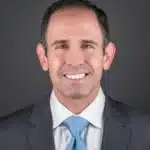
Alex Koury is a CERTIFIED FINANCIAL PLANNER® professional, a CERTIFIED PRIVATE WEALTH ADVISOR (CPWA®), and holds a Certified Exit Planning Advisor (CEPA®). Working out of our Scottsdale office, he has been in the financial services industry for over 15 years. He holds Series 7, 9, 10 & 66 securities registrations– and is a Registered Representative with Mutual Group.

Jason Hosler holds Series 7 and 66 FINRA securities registrations. He brings a technological edge to our firm and helps many of our clients stay current in the fast-moving age of the internet.

Bruce Hosler, Jason Hosler, and Alex Koury were collectively recognized as 2025 Forbes Best-In-State Wealth Management Teams, reflecting their collaborative approach to comprehensive wealth, retirement, and advanced tax planning. This recognition is a fantastic milestone for us, and it inspires us to continue delivering outstanding service to our valued clients every day.
2025 Forbes Best-In-State Wealth Management Teams, created by SHOOK Research. Presented in Jan 2025 based on data as of March 2024. 11,674 Management Teams were considered, approximately 5,300 teams were recognized. Not indicative of advisor’s future performance. Your experience may vary. For more information, please visit.
Transcript
Protecting and Preserving Wealth -Lifetime Gifting Strategies
Speakers: Bruce Hosler, Jason Hosler, Alex Koury, & Jon Gay
[Music Playing]
Jon Gay (00:07):
Welcome back to Protecting and Preserving Wealth, I’m Jon Gay. I’m joined by Bruce Hosler, Jason Hosler, and Alex Koury of Hosler Wealth Management, good to be with you guys as always.
Bruce Hosler (00:15):
Good morning, Jon.
Jason Hosler (00:16):
Good to see you, Jon.
Alex Koury (00:18):
Good to be with you too, buddy.
Jon Gay (00:19):
So, today, we’re talking about gifting, and I know a lot of your clients, a lot of our viewers and listeners may have accumulated wealth over the course of their lives and they want to find the most efficient way to pass that wealth on to the next generation. And a lot of times they don’t want to wait for them to be giving from beyond the grave, they want to do it while they’re still here. So gifting is going to be our focus today, Bruce.
Bruce Hosler (00:41):
The title of this is Lifetime Gifting Strategies for Financially Successful Families, and I titled it that way on purpose for a couple of things. First of all, many families don’t consider themselves wealthy, so I’m calling it financially successful families because you don’t have to be wealthy, you can still gift, folks, to your kids and we call it lifetime while you’re alive.
You can do this while the kids are alive and they can give you the appreciation. You can see them use the money, benefit from the money, and see them enjoy some of the fruits of your success, and we’re seeing this more and more.
Recently, Jason and I had a family up in Prescott, we offered a family meeting and we set them up. They wanted to do gifting for the kids, they have a plan for gifting over the next three years. This is very, very good for families because as parents, you get to see your children enjoy this money while you’re alive.
Jason Hosler (01:44):
Oftentimes, Jon, too, what we’re seeing is it comes in at a very crucial time for the next generation, whether they’re having children, buying houses, making career changes and moves.
Often, their cash flow is struggling, and it gives them a little boost to have the stability or to be able to take the next step in their journey. And that’s very gratifying in a lot of cases for our clients to be able to do that for our children, give them a little leg up, and get to see that while they’re still alive.
Bruce Hosler (02:16):
Our previous recording on the foundational financial plan — if you have a foundational financial plan, now you have the math that tells you, “Hey, how much could we afford to gift while we’re alive to the kids and not put our retirement in jeopardy?” And so, it frees the parents up to feel like they can be more generous with the kids and help them out within the limits.
Now, I want to talk about some of the limits. The first thing is the estate tax exemption amount in 2026 has now been raised with the One Big Beautiful Bill Act to $15 million per person; husband and wife, $30 million for a family. The annual amount is still at $19,000 per recipient unchanged from 2025. Now, this is important.
One of the things that when we look at what’s out there, people are sometimes saying, well, as a husband and wife, that means you can gift $38,000 and maybe write one check from both of you. That’s called gift splitting. I don’t want our listeners to make that mistake because it requires you, even though you did not give over the exemption amount, you have to file a gift tax return, a 709, and you have to keep that into perpetuity.
It is a permanent return until you die and your estate tax, your 706, is filed. So don’t make that mistake folks. If you’re a husband and wife, let’s say me and Laura and Jason’s my son, I can write a check for $19,000, Laura can write a check for $19,,000. Do not write one check for $38,000, folks. Do not do gift splitting.
Jon Gay (03:58):
That is something that’s come up in this podcast before, and I’m glad you reiterated it Bruce, and it wouldn’t be coming up repeatedly if people weren’t making this mistake.
Bruce Hosler (04:06):
Exactly. And the thing is, is they have to keep that 709. It’s not like an income tax return that after seven years, you don’t have to worry anymore. No, you have to keep this the rest of your life and keep it active. Now, Jason, how many people can someone give to? Is there a limit?
Jason Hosler (04:24):
There’s not a limit on the number of people that you could give to, no. You can give up to everything you have away. I don’t recommend it, but yeah, those gift limits are a per person limit that triggers the requirement to file that gift tax return.
Jon Gay (04:41):
So, this is like Oprah, you’re walking around, you get $19,000, you get $19,000, you get $19,000! (laughter)
Bruce Hosler (04:47):
And nobody has to file a tax return and nobody’s paying any taxes. The person that’s gifting doesn’t have any tax implications, and the person receiving the money, it’s tax-free to them, as long as you’re just giving cash.
Now, Alex, one of the things we see is these grandparents, they want to fund 529 plans for their grandchildren. And really, it’s good because they’re not included in the FAFSA calculation, the grandparent technically owns the account, the grandchild’s a beneficiary, but they can front load those, Alex. Talk to our listeners about that.
Alex Koury (05:17):
Absolutely. So, 529s are really an underutilized tool in estate and wealth transfer planning because within a 529, they’re set up for education. You could be the owner, you set up your grandchildren as beneficiaries. And in the first year of opening those accounts, you can do what’s called a max funding or front-loading gift up to five years of your annual gift limits.
So, that would be $95,000 per person or $190,000 per couple that you could give in one year to the 529 plan for that first year. Now, you have to wait five more years to fund it again in the future, but it gives you a big, big opportunity to shift a bunch of money away from your estate into a plan that grows tax-free as long as those monies are used for education purposes.
But also, down the road, if there is any money left over, that could be another legacy plan for a grandchildren’s children or grandchildren down the road, or there are some other Roth converted benefits in the future that can be used to help your kids get a Roth IRA set up in the future and start funding a retirement plan for them just as well.
Bruce Hosler (06:25):
So, one of the things I want to caution our listeners about, it may be a temptation, to gift appreciated assets. Let me give you a for instance. Let’s say we’re a grandparent and we have some Nvidia stock and it’s gone up a lot.
If I hold onto that stock until I die, my beneficiaries get a step up in basis and they don’t have to pay taxes. But if I give the stock, let’s say I want to gift it to my grandchildren, so I gift them shares and let’s say my cost basis is clear down here, but the value in Nvidia is clear up here, my grandchildren inherit that cost basis. So, if they sell the Nvidia, they have to pay all that capital gains tax.
So, appreciated assets, we want to be very careful. What does that involve? Well, it could be stock, it could be real estate, it could be business interests. So, if I own a business that’s highly appreciated and I want to gift shares to the kids or the family. So, we want to watch what assets we’re actually gifting and understand the comparisons on that.
Now, sometimes we want to give charitably. Jason, on donor advised funds, we get to be the advisor. We get to advise where the money goes to charity. Sometimes grandparents want to include the grandchildren in that or the children and they can include them as subsequent givers. But that’s what we want to use those appreciated assets to gift with those.
Talk about donor advised funds just for a brief second.
Jason Hosler (08:00):
Yeah, we’ve really started utilizing these more in the last few years as our clients have had assets appreciated and they have had situations where they can utilize a large tax deduction. Donating an appreciated asset is a perfect way to allocate what’s going to your beneficiaries and then what’s going to charity.
If you have something with a large unrecognized capital gain and you’re doing some gifting to both charity and your heirs, the one that has the high unrecognized capital gain, well, you didn’t pay tax on that because you donated it to the donor advised fund; the donor advised fund isn’t going to pay tax on that as a charity. And then what we’re often seeing is that the family is involving their heirs in the decisions of where they want to give and make an impact philanthropically in their communities and in the world.
And it’s been very good to see both the impact to the families and to the communities and the charities that are benefiting this as well as the tax side, where if we are doing a large Roth conversion, we have a business sale or we have a large piece of real estate that’s sold, can we offset that with a large donation in the same year? And oftentimes, we’re able to use that and that can then carry forward if you don’t use all that deduction too.
So, there’s a lot of good that comes out of it. You’ve got to remember, however, that it is a donor advised fund, and you’re advising that fund on where their donation could go. Normally, that works very smoothly, but you are making a completed gift. You are giving up control of that money. So, you need to be clear about your understanding of that.
Additionally, after you’ve made that donation, you don’t have to then direct the donor advised fund to send it all out to a charity right away, you can retain the funds within that donor advised fund, we can help you invest and grow those assets so you can do further gifting over time, but you still receive that upfront deduction. Very flexible tool.
Bruce Hosler (10:17):
A lot of fun folks to see your donor advised fund grow and be able to give more money to the charities that you love.
Alex, I want to talk about for our very successful families that perhaps have an estate that is pushing up against the 15 million exemption amount or higher, it’s not the end of the world, folks, if you gift more than the annual exemption amount. So certainly you want to start there.
But if they gift more and we prepare a 709 gift tax return, do they have to pay tax? No. Do the children have to pay tax? No. But we get that money out of the estate, what’s the big benefit for that Alex?
Alex Koury (10:58):
So, we need to first of all, recognize that if you have a large estate, $15 million for an individual or $30 million for a couple, any dollar above those thresholds receives an estate tax of 40%. So, if you make an extra dollar above that, you’re going to pay 40 cents on the dollar in taxes. So, it’s very important instead to create other strategies to, again, keep yourself below those limits.
So, that way, when you do pass away, your whole estate is, in theory, estate tax-free, we avoid paying the additional 40%. But that requires looking at your gifting strategy, your different investments, your total portfolio to keep yourself consistently down below that limit, whether you’re gifting towards children, other personal beneficiaries, or charities for that matter.
But again, we want to reduce your tax liability for your heirs, because let’s say for example, a business or a home, if you were to die, they inherit these assets, well, they can’t just chop off a piece of the house and give it to the IRS for the sake of paying the taxes, they’d have to sell that whole asset.
That may not be part of what your plan is, what you’re trying to accomplish there. So, it’s very, very important you keep on top of where you stand with your total estate and potential tax liabilities above those levels.
Bruce Hosler (12:23):
And really, Alex, because it’s $15 million per person, we can use a living trust and split that up. But folks, if your estate is at 15 million or approaching that because you want to leave it to your spouse and we don’t want to leave too much money in their name for their $15 million, we can split that up to the $30, but you may even want to be gifting.
That’s kind of a triggering moment in my mind, that you may want to be gifting more than just the minimum or the maximum annual $19,000 a year. You may want to be gifting more than that and filing gift tax returns, and we’re running into a lot of clients that are wanting to do that.
And Jason, we see them enjoying this opportunity of sharing their wealth with their children, their financial success. Talk a little bit about how cool that is, what we see happening with that.
Jason Hosler (13:16):
Well, I think we’re all very familiar with one example, which is how much the price of real estate went up during COVID and afterwards here in the United States. And that’s made getting into a starter home or even moving for a job or other reason for relocation a little bit more difficult.
Jon Gay (13:34):
I know my wife and I looked for houses for two years. It wasn’t even a starter home. We were upgrading and it took us two years to find the house we wanted. Your point’s well-taken, Jason.
Jason Hosler (13:41):
So, a critical life moment like that (buying a home, starting a business, funding education), those points that clients’ children have need at, and they need a way to get across that gap. Parents stepping in and helping them get across that gap, being able to take that next step in their life, that’s been very gratifying for our clients who’ve been able to make those differences in their children’s lives, help them take that next step.
In a lot of ways, we’ve seen our clients actually get more gratification from that than some of the other ways that people spend their savings.
Bruce Hosler (14:24):
So, one last thing I kind of want to talk about is control by the parents. They have saved and scrimped and herded these funds their whole life. And sometimes, we might … I don’t want to say we’re helicopter parents, but we work so hard for that money, we want to give it to the kids, we don’t want them to spend it. We want them to save it and learn how to invest and we want to still control that, even though we gave it to the kids.
And so, I guess I have a caution for people is, you know what, folks? Your kids learn more from the mistakes they have made than from when they guess right the first time. I’ll give you an example. We had some family; they gifted some money to their kids. And so, one of the kids wanted to buy a company and so he invested in this company, it happened to be in the oil business on that.
And his sister wasn’t so confident. And so, she said, well … and we helped her pick some companies that she was familiar with and she invested in those. Well, his company immediately lost quite a bit of money and he lost confidence on that. But then he learned that he could trust us to help him give him some ideas on that going forward.
But the parents’ kind of want to be able to look in those accounts and control them. And I’m just saying, folks, you have to let your kids learn that maybe some professional help is good. Maybe they’re not as smart as they thought they were, or that they can make some mistakes.
Alex, do you want to say something?
Alex Koury (15:57):
Absolutely. So, here at Hosler Wealth Management, we require a minimum of a million dollars to work with us for the family. But we also do allow for children to open up accounts under the same household of the parents and work with us directly one on one.
So, like Bruce already mentioned, parents are reluctant to give kids money because they’re going to do something dumb with it, whatever that may be. But if you can connect them with advisors like ourselves to help them learn now while they’re younger and still not really aware of what they may inherit in the future, but we can help teach them and mould them into becoming stewards of legacy wealth, the succession planning in the future becomes a lot easier because as you’re still alive, you’re going to probably live another 15, 20 or more years.
We can help teach your children along the way to just be, again, good stewards. They’re going to listen to us. They don’t want to listen to parents anyways, so we take care of that for you as being our clients.
Bruce Hosler (16:54):
And we’re there at the gate to help coach those kids for the rest of their lives. We’re multi-generation here. You can see Alex and Jason, and the team are going to be here for a lot of years to help your family out.
Jon Gay (17:04):
Well, and I think it’s a microcosm of a larger piece of parenting, which is it’s very hard for parents to watch their kids make mistakes whether it’s tripping and falling- figuratively or literally. And you’re talking about this in the financial piece, but the good news is in this example they’ve got Hosler Wealth Management as a backstop that if they do make a mistake, you’re there to help them through it.
Bruce Hosler (17:26):
Well, and we can kind of counsel them and coach them when they’re about to make the mistakes like, “Are you really sure you want to do that? Here’s the consequences. Here’s another choice.” And sometimes, the kids don’t even know that they had other options.
And so, we’re there to help provide them with good financial planning, sound financial advice, tax advice, investment advice, estate planning advice. And they value that and they appreciate the relationship. That’s been our experience.
Alex Koury (17:52):
I say one more thing briefly is that we stress confidentiality. So, you being the parents and you’re having children work with us as well as we do not share information unless you’re giving that to them on your own. So, we make sure that we keep those conversations within the group of who we’re working with, whether it’s the children or the parents.
Bruce Hosler (18:14):
Yeah, especially the children. So, even though mom and dad want to find out, we can’t tell you what your kids are doing with their money that you gifted them, I’m sorry.
Alex Koury (18:20):
Vice versa.
Jon Gay (18:22):
Like when your kid goes to the ER once they’re 18, if they don’t want you to know, you’re not going to know.
Bruce Hosler (18:27):
Yeah. But if you have that power of attorney, then you can help them when they need you most, so it’s very important.
Jon Gay (18:32):
I’m glad you brought it back around to the planning piece of it, and that is a good place to leave it. Bruce and Jason and Alex, if our listeners or viewers want to reach your team at Hosler Wealth Management, how do they best find you?
Bruce Hosler (18:42):
Hey, they can reach us on the website and schedule appointment at www.hoslerwm.com, or they can call one of the offices in Scottsdale, Alex?
Alex Koury (18:52):
(480)-994-7342.
Bruce Hosler (18:56):
And in Prescott, Jason?
Jason Hosler (18:57):
You can give us a call at (928)-778-7666.
Jon Gay (19:02):
Really valuable information. As always, gentlemen, we’ll talk again soon.
Alex Koury (19:05):
Great, Jon. Thank you.
Bruce Hosler (19:06):
Thank you, Jon.
Jason Hosler (19:07):
We’ll see you soon.
[Music playing]
Disclosure: (19:08):
Investment advisory services are offered through Mutual Advisors LLC, DBA Hosler Wealth Management, a SEC registered investment advisor. Securities are offered through Mutual Securities, Inc., a member FINRA/SIPC. Mutual Advisors, LLC and Mutual Securities, Inc. (collectively Mutual Group) are affiliated companies.
Forward-looking commentary should not be misconstrued as investment or financial advice. The advisor associated with this podcast is not monitored for comments, and any comments should be given directly to the office at the contact information specified.
Any tax advice contained in this communication, including any attachments, is not intended or written to be used and cannot be used for the purpose of 1) avoiding federal or state tax penalties; 2) promoting marketing or recommending to another party any transaction or matter addressed herein; and 3) tax preparation and accounting services are offered independently through Hosler Wealth Management Tax Services.
Any tax advice provided by tax professionals under Hosler Wealth Management Tax Services is separate and unrelated to any advisory or security services offered through Mutual Group. The accuracy, completeness, and timeliness of the information contained in this podcast cannot be guaranteed. Mutual Group does not provide tax or legal advice. You should consult a legal or tax professional regarding your individual situation.
Accordingly, Hosler Wealth Management does not warranty, guarantee or make any representations or assume any liability with regard to financial results based on the use of the information in this podcast.
Be The First To Know About New Podcast Episodes!
"*" indicates required fields