





Be Careful Before Opening Trump Accounts: The Hidden “Who Can Open It” Trap

Share:


Table of Contents
Trump Accounts are framed as a way to create a new generation of investors—kids who grow up more financially educated and more comfortable with the stock market.
The catch is paperwork authority. People may be able to apply online, but the accounts can’t really be opened until after July 4, 2026.
Saving for a Minor? Know Your Options. How a Trump account compares with a Roth IRA, 529, & UTMA/UGMA
Two early gotchas show up before the first dollar goes in
The headline isn’t the investment menu. The headline is timing and authority.
- Timing: Online applications may be possible, but “open” doesn’t truly happen until after July 4, 2026.
- One-per-child limit: Proposed regulations are described as allowing only one Trump Account per child.
Who can establish a Trump Account
A “pecking order” is described for who has authority to establish the account. The order matters because signing while someone else has higher authority can create serious risk.
For children born on or after January 1, 2025:
- Parents (or the legal guardian) are described as the primary opener.
- A grandparent opening is described as appropriate only in the rare case where the grandparent is actually the guardian.
- A grandparent contribution up to $1,000 is discussed as tied to claiming a federal government contribution when the grandchild is a dependent of the grandparents.
For children born before January 1, 2025:
- The order is described as legal guardian → parent → adult → sibling → grandparents.
- A grandparent is described as not legally authorized if the child has a parent, legal guardian, or adult sibling available; only after higher-priority categories are exhausted can a grandparent open the account.
The perjury risk families won’t see coming
Signing can be deceptively easy. Form 4547 is described as requiring a declaration under penalty of perjury that the signer has examined the form and that it is “true, correct, and complete.”
The warning is sharper for older children (born before 2025): the form/website is described as not clearly warning grandparents that opening could represent that no higher-authority person is available—the exact point that can create trouble.
The practical family workflow that avoids the trap
The clean approach described:
- Wait until accounts can actually be opened after July 4, 2026.
- Have the person with proper authority establish the account (parents/legal guardian first, grandparents generally last).
- Let grandparents do the high-impact role: encourage the parents to open the account, then “write the check” and fund $5,000 for 2026 to get it started.
Funding, investing, and the long-game
A few planning angles are emphasized:
- Funding: $5,000 a year is described as meaningful compounding for a child by age 18.
- Investing: Larger stock indexes are discussed (examples: S&P 500 and NASDAQ 100), with a reminder that different indexes can have very different performance.
- Tax opportunity: At age 18, the account is described as being turned over into a traditional IRA; a young adult with little income is described as potentially converting to a Roth IRA and letting it grow for life as “sacred money.”
- Behavioral advantage: Calling it a “retirement account” is described as a way to keep the money from being treated like a piggy bank.
FAQ: Trump Accounts, grandparents, and early mistakes
1) Can a Trump Account be opened right now?
Online applications may be possible, but accounts can’t really be opened until after July 4, 2026.
Planning note: “Apply” can sound like “open,” but the timing gate still matters.
2) How many Trump Accounts can one child have?
Proposed regulations are described as allowing only one Trump Account per child.
Planning note: One-per-child means coordination matters before anyone signs anything.
3) Who is supposed to open the account for a child born on/after Jan. 1, 2025?
Parents (or the legal guardian) are described as the appropriate opener.
Planning note: Grandparent enthusiasm does not automatically equal authority.
4) When can a grandparent open for a child born on/after Jan. 1, 2025?
A grandparent opening is described as limited to the rare case where the grandparent is the guardian.
Planning note: “Grandparent” and “guardian” are different roles.
5) For children born before 2025, why does the opening order matter?
A hierarchy is described (legal guardian, parent, adult, sibling, then grandparents), and perjury risk is tied to opening when a higher-authority person exists.
Planning note: The danger is what the signature implies, not the signer’s intent.
6) What form is being referenced?
Form 4547 is described as the new form tied to opening/elections.
Planning note: A routine-looking form can still carry high-stakes declarations.
7) What funding levels are discussed?
A $5,000 annual contribution is discussed, and a $1,000 contribution is discussed in connection with claiming a federal government contribution in a dependency scenario.
Planning note: The $1,000 point is conditional and easy to overgeneralize.
8) What investing options come up?
Broad stock indexes are discussed, with examples including the S&P 500 and NASDAQ 100.
Planning note: Index choice can still create very different outcomes.
9) What is the long-term “tax move” described?
Turning into a traditional IRA at 18, followed by a potential Roth IRA conversion when income is low, is described as a major opportunity.
Planning note: Timing and income level drive whether the opportunity exists.
10) What’s the cleanest message for grandparents?
Encourage the parents to open the account after July 4, then fund it—“write the check.”
Planning note: Support can be financial and educational without being administrative.
Additional Educational References:
Summary
Trump Accounts may offer a powerful long-term head start, but the opening authority rules and penalty-of-perjury signature risk make “who opens it” the first planning decision that matters. For help sorting the opening hierarchy, funding approach, and long-term Roth conversion opportunity described here, contact our team at Hosler Wealth Management.
For more information about anything related to your finances, contact Bruce Hosler and the team at Hosler Wealth Management. Contact Our Team: https://www.hoslerwm.com/contact-us/
Call the Prescott office at (928) 778-7666 or our Scottsdale office at (480) 994-7342.
To view all Protecting and Preserving Wealth Podcast episodes: https://www.hoslerwm.com/protectingwealthpodcast/
Limitation of Liability Disclosures: https://www.hoslerwm.com/disclosures/
Copyright © 2026 Hosler Wealth Management | All Rights Reserved. #ProtectingWealthPodcast #ProtectingandPreservingWealthPodcast #HoslerWealthManagement #BruceHosler
Produced by JAG Podcast Productions – https://www.jagpodcastproductions.com.
Host


Bruce Hosler is the founder and principal of Hosler Wealth Management which has offices in Prescott and Scottsdale, Arizona. As an Enrolled Agent, CERTIFIED FINANCIAL PLANNER® professional, and Certified Private Wealth Advisor (CPWA®), Bruce brings a multifaceted approach to advanced financial and tax planning. He is recognized as a prominent financial professional with over 29 years of experience and a eight-time consecutive *Forbes Best-In-State Wealth Advisor in Arizona. Bruce recently authored the book MOVING TO TAX-FREE™ Strategies For Creating Tax-Free Retirement Income And Tax-Free Lifetime Legacy Income For Your Children. www.movingtotaxfree.com.
In the Protecting & Preserving Wealth podcast, Bruce and his guests discuss current financial topics and provide timely answers for our listeners.
If you have a topic of interest, please let us know by emailing info@hoslerwm.com. We welcome your suggestions.
2018-2025 Forbes Best In State Wealth Advisors, created by SHOOK Research. Presented in April 2025 based on data gathered from June 2023 to June 2024. Not indicative of advisor’s future performance. Your experience may vary. For more information please visit.
Guest Profiles
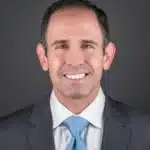
Alex Koury is a CERTIFIED FINANCIAL PLANNER® professional, a CERTIFIED PRIVATE WEALTH ADVISOR (CPWA®), and holds a Certified Exit Planning Advisor (CEPA®). Working out of our Scottsdale office, he has been in the financial services industry for over 15 years. He holds Series 7, 9, 10 & 66 securities registrations– and is a Registered Representative with Mutual Group.

Jason Hosler holds Series 7 and 66 FINRA securities registrations. He brings a technological edge to our firm and helps many of our clients stay current in the fast-moving age of the internet.

Bruce Hosler, Jason Hosler, and Alex Koury were collectively recognized as 2025 Forbes Best-In-State Wealth Management Teams, reflecting their collaborative approach to comprehensive wealth, retirement, and advanced tax planning. This recognition is a fantastic milestone for us, and it inspires us to continue delivering outstanding service to our valued clients every day.
2025 Forbes Best-In-State Wealth Management Teams, created by SHOOK Research. Presented in Jan 2025 based on data as of March 2024. 11,674 Management Teams were considered, approximately 5,300 teams were recognized. Not indicative of advisor’s future performance. Your experience may vary. For more information, please visit.
Transcript
Protecting and Preserving Wealth – Grandparents, Be Careful Before Opening Trump Accounts
Speakers: Bruce Hosler, Jason Hosler, Alex Koury, & Jon Gay
[Music Playing]
Jon Gay (00:05):
Welcome back to Protecting and Preserving Wealth. I am Jon Gay, I am joined as always by Bruce Hosler, Jason Hosler, and Alex Koury of Hosler Wealth Management. Gentlemen, always a pleasure to be with you.
Bruce Hosler (00:15):
Jon, it’s great to be with you again. Thank you.
Jason Hosler (00:17):
Good to see you, Jon.
Alex Koury (00:18):
Hey, Jon.
Jon Gay (00:19):
So, today, we’re talking about these new Trump accounts. So Bruce, as the grandfather in the group (I’m going to assume that you’re the sole grandfather in the group- no offense), we want to dig into these Trump accounts today and what you found out looking into them a little bit more. Where do you want to start?
Bruce Hosler (00:34):
Well, number one is I think they are great. How fantastic to have a baby, 10 or 12 years later for the child to find out, hey, they’re a stock guru and they’re investing in the stock market. We’re going to have a whole new generation of capitalists. I think this is fantastic because they will also be more financially educated and financially astute by the time they come into their young adulthood. So, they’re great.
However, however, there’s some new information we’re finding out about them. Now, people have been able to go online and apply for them, but technically you can’t really open the accounts up until after July 4th of this year, 2026.
Now, grandparents will be able to make a contribution which is what I’m excited for, but some of us grandparents are kind of control freaks and we want to like open the accounts ourselves for our grandchildren, and the law comes out and it says that we probably cannot do that. And if we try and do that, that we may be perjuring ourselves on the form if we open it up and actually sign the form. And so, I don’t want any of our listeners to do that.
Now, Alex, the proposed regulations say that there can only be one Trump account per child. And the regulations set out there’s two main rules on who can establish these accounts. Let’s go through the first one.
So, since January of 2025, if a grandchild was born, who can open those accounts, Alex?
Alex Koury (02:17):
Primarily, the parents are the ones that should be opening up the account, or the legal guardian, is really what it comes down to. But typically, we’ll just say in this example, it’s going to be the parents. Now, with that being said, the grandparent can still make a contribution to that account up to $1,000 really to claim the federal government contribution if the grandchild is a dependent of the grandparents.
Bruce Hosler (02:43):
So, in that rare case where the grandparent is the guardian, they’re the ones that can open the account, but only in those cases. So, most of us grandparents, we’re not the guardian, the child’s not our dependent, they’re not living in our household, so we don’t have the authority to do that.
Now, if the grandchild was born before January 1st of 2025, Jason, a grandparent is the last one in line after a legal guardian or a parent or other adult, so grandparents can’t legally establish these accounts for their older grandchildren that are still under 18, but what are some of the nuances there that we need to be concerned with regarding this penalty of perjury if the grandparents are trying to get involved there?
Jason Hosler (03:30):
So, just like with IRAs, it looks like these are going to have several rules that you have to follow and this order that they’ve laid out, legal guardian, parent, adult, sibling, then grandparents. So, grandparents being last in line after all of these other relations to the child, you just have to make sure with these accounts that you’re going to be checking the rules, following those rules and not just being in a hurry to jump to it.
So, that penalty of perjury applies to someone who opens an account when there’s no other person with a higher authority. So, that higher authority is that order that they’re laying out for these accounts.
Jon Gay (04:13):
It’s like a pecking order of who can open them.
Bruce Hosler (04:15):
And it’s kind of deceiving, Jon, because you can go to the website or you can fill out this form 4547, which is the new form, and it only requires the grandparent opening the account to declare under penalty of perjury that he has examined the form and to the best of my knowledge and belief, it is true, correct, and complete.
There’s nothing on the form of the website warning the grandparent that making this election for children that are born before 2025, that they’re representing to the IRS, that there’s no other person with higher authority available. So, that’s where they potentially can get into trouble.
Now, for these reasons, we need to make sure that the guidance from the IRS comes out clear to the parents or the grandparents or whoever’s able to open these accounts before we wade in and do that.
Now, we’re very excited about Trump accounts. We want our clients to open them or have the parents open them and the grandparents to be able to contribute. And of course, that’s going to be $5,000 a year. That’s going to add up to a lot of money for children by the time they’re 18 and to do that now.
Alex, we have a kind of a closing paragraph here that talks about to reiterate, you want to review those rules with our listeners just for a minute here.
Alex Koury (05:35):
Let’s do that here. So, again, if your grandchild was born since or so on or after January 1st of 2025, the grandparent cannot make the election to claim the $1,000 federal government contribution and elect to open the Trump account at the same time unless the grandchild is a dependent of the grandparents. So, if you’re legally the guardian of the grandchild, then yes, you can make this election and open up the account but if you’re not, you cannot do this.
Bruce Hosler (06:08):
So, Jason, what about those children that were born before 2025?
Jason Hosler (06:13):
So, those that were born before January 1st, 2025, and that’s going to account for most of the grandchildren of our listeners, of course, those grandchildren, if they have a parent or a legal guardian or an adult sibling, then the grandparent is not legally authorized to establish the account. So, it’s only after those three higher priority categories have been exhausted can a grandparent open a Trump account for their grandchild.
Bruce Hosler (06:40):
So, the message that I have for our listeners today is if you’re a grandparent and you want to help your grandchild, encourage your children (that are the parents of your grandchildren) to open these accounts after July 4th, and then your job is to write the check or to pay the money to put the $5,000 in there for 2026 to get it started.
Now, let’s just go over some of the investment choices. Primarily, they’re talking about larger indexes of stocks. So, for example, the S&P 500 or maybe the NASDAQ 100, and some of those different indexes could have very different performance. And so, maybe you want to be selective on where those accounts are being funded to, where that money’s going. As we get more information on these Trump accounts, we want to bring it to you.
But I wanted to bring this to your attention because these regulations just came out the end of April, and I had not seen anything like this before, and we don’t want our clients perjuring themselves by signing the form or opening the account.
Jon Gay (07:46):
A minute ago, Bruce, you said that the grandparent’s job, assuming the parent opens the account, is to write the check. I would assume, as the grandfather in the room, that that’s a general rule, is grandparent’s job is to write the check, right?
Bruce Hosler (07:57):
Yeah. You know, we’re always helping the children and the grandchildren-
Jon Gay (08:00):
No offense, Jason.
Jason Hosler (08:01):
No, not at all. But the other thing is, and we’ve seen this with our clients and in our own family too, we’ve had people asking about these Trump accounts because it’s big news. Michael Dell came out and said that he was going to do contributions to all the Trump accounts for all the children across the country.
So, because of this news, there’s a lot of conversation around that. So, I think the other thing that grandparents can take away, use this as an opportunity to talk, to teach, to investigate how the family handles finances, how you communicate about your financial future as a family across generations, and to pass those lessons on. It’s a perfect opportunity for those moments.
Jon Gay (08:37):
I’m really glad you said that, Jason. In the beginning of this podcast, I was thinking about what Bruce said, where you’re creating wealth for these kids that were born fairly recently, and it’s good because high school and middle school typically don’t educate on financial spending. But the point you just made, Jason, is certainly well-taken because a lot of families don’t talk between generations about financial planning.
So, that is so huge, and that is an opportunity that should not be missed, given this topic that we’re talking about today. And if you need help financially talking about this, planning for your family, that’s what Hosler Wealth Management does regarding anything in your financial future.
Bruce Hosler (09:18):
Well, and Jon, kind of as a closing note, the thing that I want to bring to everyone’s attention is this, the opportunity.
As the author of Moving to Tax-Free, and as Hosler Wealth Management focuses on minimizing taxes for our clients, I want you to imagine you have a child, one, two, three, four, five, six, seven, whatever, and you start funding that $5,000 a year, and it starts growing with market rates of return of, let’s say, average of around 10% a year because it’s all in the stock market.
And when that child turns 18, this account is now kind of turned over into a traditional IRA. Imagine the possibilities for a child that doesn’t have any income at 18, 19 or 20, converting that entire account to a Roth IRA, and now letting that grow the rest of their life.
Not touching it, just considering that to be the sacred money they have, and by the time they get to retirement, that is going to be a significant amount of tax-free money. Folks, that is the tax move that we want people to understand that these Trump accounts provide.
Jon Gay (10:32):
We’ve talked about Roth IRA conversions in previous episodes, I’ve got to imagine when you’re 18 and you’re bagging groceries or delivering for Uber or whatever your gig is, that’s probably one of the lowest tax brackets you’re going to be in in your entire life.
Bruce Hosler (10:45):
Right, right, that’s opportunity. The hard thing, though, is, Alex, how are we going to keep these kids from getting their hands on that account or persuade them not to touch it and treat it as sacred money?
Alex Koury (10:58):
Well, the primary thing, and this is the great part about the Trump accounts in general, is that, again, it’s an account that’s defined as a retirement account. So, you put those words in a child’s mind or an adult’s mind, whatever it is, we don’t touch that money. Now, it’s different from a savings account or a checking account, whatever those things are.
So, if you can start to help compartmentalize these things for a child and understand that we don’t touch this, and you can demonstrate the long-term growth factors of what this could look like when you turn 65, I think people are a lot more excited about that as opposed to, well, it’s just a little bit of money, does it mean a whole lot? It can mean a whole lot. And that’s what we need to communicate across legacies and generations. These are big deals of working with money and growing it now.
Jon Gay (11:43):
Compound interest, Einstein called it the eighth wonder of the world, right?
Bruce Hosler (11:46):
Absolutely.
Jon Gay (11:47):
And I like that phrase of a retirement account as opposed to the smashing the piggy bank for the sports car or the video game system or whatever. I’m stereotyping 18-year-olds here, but whatever I would have bought when I was 18.
Alright, if our listeners and viewers want to talk to the team at Hosler Wealth Management about this evolving Trump accounts or anything related to their financial future, what are the best ways to reach you?
Bruce Hosler (12:09):
Jason, how do they get you in Prescott?
Jason Hosler (12:11):
Give us a call at (928)-778-7666 in Prescott.
Bruce Hosler (12:16):
Alex, how about in Scottsdale?
Alex Koury (12:18s):
Yep. (480)-994-7342.
Bruce Hosler (12:22):
And of course, on the website folks, hoslerwm.com.
Jon Gay (12:26):
Really good information as always today, gentlemen. We’ll talk again in a couple of weeks.
[Music Playing]
Bruce Hosler (12:29):
Thank you, Jon.
Jason Hosler (12:30):
Talk to you soon.
[Music playing]
Disclosure: (12:56):
Investment advisory services are offered through Mutual Advisors LLC, DBA Hosler Wealth Management, a SEC registered investment advisor. Securities are offered through Mutual Securities, Inc., a member FINRA/SIPC. Mutual Advisors, LLC and Mutual Securities, Inc. (collectively Mutual Group) are affiliated companies.
Forward-looking commentary should not be misconstrued as investment or financial advice. The advisor associated with this podcast is not monitored for comments, and any comments should be given directly to the office at the contact information specified.
Any tax advice contained in this communication, including any attachments, is not intended or written to be used and cannot be used for the purpose of 1) avoiding federal or state tax penalties; 2) promoting marketing or recommending to another party any transaction or matter addressed herein; and 3) tax preparation and accounting services are offered independently through Hosler Wealth Management Tax Services.
Any tax advice provided by tax professionals under Hosler Wealth Management Tax Services is separate and unrelated to any advisory or security services offered through Mutual Group. The accuracy, completeness, and timeliness of the information contained in this podcast cannot be guaranteed. Mutual Group does not provide tax or legal advice. You should consult a legal or tax professional regarding your individual situation.
Accordingly, Hosler Wealth Management does not warranty, guarantee or make any representations or assume any liability with regard to financial results based on the use of the information in this podcast.
Be The First To Know About New Podcast Episodes!
"*" indicates required fields