





The Foundational Financial Plan™

Share:


Table of Contents
A “financial plan” that lives in a spreadsheet and never changes is not a plan—it’s a snapshot. The framework here treats planning like a living system: inputs update, scenarios get tested, and the outcome stays anchored to the primary objective—not running out of money.
Seven moving parts work together:
- Retirement income plan (dynamic software + Monte Carlo probability)
- Tax planning and Roth conversion strategy
- Estate, legacy, and beneficiary planning
- Social Security strategies
- Insurance planning (including long-term care themes and tax-free planning concepts discussed)
- Risk analysis (risk number alignment)
- Investment plan (income bucket + long-term growth bucket)
Related listening to deepen each step:
Step 1 — Retirement Income Planning That Updates As Life Changes
Retirement planning breaks down when it can’t answer real questions in real time. That’s the case for dynamic planning software: plug in income sources, model uncertainty, then pressure-test the plan—especially when life throws a curveball.
This approach is built to do the work that spreadsheets can’t:
- Pull in retirement income sources like Social Security, pensions, IRAs, and investments.
- Run Monte Carlo simulation—described as a thousand iterations—to estimate the statistical probability of success.
- Allow flexibility for taxes, inflation, healthcare, and long-term costs.
The best feature is the most practical: “what if” analysis. Add spending for travel—$20,000 per year for 10 years—and see the impact immediately, while still protecting long-range goals. That’s what turns “maybe” into “yes” or “no,” backed by math rather than guesswork.
Related listening on planning frameworks and retirement decision-making lives throughout the show library:
Step 2 — Tax Planning And Roth Conversions As An Ongoing Strategy
Tax strategy belongs inside the plan—not stapled on after the fact. The tax planning conversation here is blunt: over-relying on tax-deferred accounts can become a trap if future tax rates rise.
The operating principle is clear:
- Use a tax bracket strategy to move systematically toward tax-free.
- Revisit and prepare the plan every year.
That annual cadence matters. Tax decisions compound over time, and the “right move” depends on the bracket strategy being intentional—not accidental.
Related listening:
Step 3 — Estate, Legacy, And Beneficiary Planning That Avoids Common Gaps
Estate planning is where “having documents” gets confused with “having a working plan.” The emphasis here stays on execution: titling, beneficiaries, incapacity planning, and avoiding the probate mess whenever possible.
The key priorities:
- Probate is expensive and public; avoidance is a core objective.
- In Arizona, proper beneficiary planning and titling can make probate easier to avoid.
- Durable financial power of attorney matters because incapacity happens without death (accident, Alzheimer’s).
Then comes the part most families miss: a trust can exist and still fail in practice. A common issue described is a living trust that was never funded—assets never got titled correctly into the trust structure.
Related listening:
Step 4 — Social Security Claiming Strategy: Quantitative Plus Qualitative
Social Security decisions are too big for rules of thumb. That’s why the approach described runs software that evaluates over 3,000 claiming scenarios—then narrows down to realistic options.
The decision isn’t just “how much money” and “when.” It’s also:
- claim early vs late
- claim on a spouse record vs individual record
- adjust based on life expectancy and health realities
Sometimes that means drawing down accounts earlier to let Social Security grow later. Other times it means claiming earlier because life expectancy changes the math. The point is not perfection—it’s deliberate tradeoffs.
Related listening:
Step 5 — Insurance Planning: Long-Term Care Reality And Tax-Free Tools Discussed
Long-term care planning keeps getting more urgent, and the premium trend described here is a reminder why. Traditional policies can raise premiums sharply—even after decades of paying in.
Insurance planning themes highlighted:
- A traditional long-term care policy example included 40% premium increases in consecutive years.
- Asset-based life insurance with a long-term care rider is described as locking in premiums and benefits.
- A life insurance retirement plan concept is discussed as part of a broader “move to tax-free” approach for taxable money, alongside Roth conversion work for qualified money.
Related listening (tax-free planning themes):
Step 6 + Step 7 — Risk Analysis And Investment Plan: Align The Risk Number, Then Build The Buckets
Forget the vague investor labels. “Conservative,” “moderate,” and “aggressive” don’t say much when retirement income is on the line. The approach here pushes for a measurable risk score—then checks whether the portfolio is actually taking the same level of risk.
That’s where Nitrogen comes in. Risk tolerance gets translated into a number (the conversation uses a 0–100 style example), then the existing portfolio is analyzed to see if the two match. If the personal score and portfolio score aren’t aligned, the mismatch becomes the planning problem to solve.
From there, portfolio structure follows purpose:
- A two-bucket strategy is described.
- One bucket is positioned as an income bucket for 10 years.
- The remaining assets sit in a long-term bucket positioned for equities/stock, with private opportunities also mentioned.
The point is not complexity. The point is behavior and durability: protect near-term income needs so the long-term bucket can stay invested long enough to matter.
Related listening (portfolio/risk themes) can be found across the broader show library.
What This Framework Is Designed To Deliver
The throughline is peace of mind built on visibility. When the numbers are clear, big decisions get easier: travel more, spend more, adjust goals, or ride out volatility—without guessing. A satisfaction guarantee is also described.
Quick Answer FAQ
- What is a Foundational Financial Plan™ here?
A seven-part framework covering retirement income, taxes, estate/beneficiaries, Social Security, insurance, risk analysis, and the investment plan.
Planning note: “Plan” often means a static projection; this framework is built to update. - Why does dynamic planning matter?
Because the plan can be updated as markets and life change, then checked against retirement probability of success.
Planning note: The value is decision-testing, not perfect prediction. - What does Monte Carlo mean in this context?
A simulation described as a thousand iterations used to estimate the statistical probability of plan success.
Planning note: Probability replaces a single straight-line forecast. - What “what if” questions get modeled?
Examples include a second home and increasing travel spending by $20,000/year for 10 years.
Planning note: Lifestyle goals become testable scenarios. - What’s the tax planning emphasis?
Tax bracket strategy plus Roth conversion planning to move systematically toward tax-free, revisited annually.
Planning note: Annual planning turns a concept into a process. - What is the estate planning focus?
Avoiding probate where possible, aligning titling and beneficiaries, and having incapacity documents like durable financial power of attorney.
Planning note: Documents matter, but implementation matters just as much. - What common trust mistake is called out?
A trust exists but isn’t funded—assets are not properly titled into the trust structure.
Planning note: A trust on paper doesn’t automatically control accounts. - How is Social Security claiming approached?
Software-driven scenario analysis (over 3,000 scenarios mentioned) plus qualitative factors like health and life expectancy.
Planning note: Claiming is strategy, not default timing. - What does risk analysis mean here?
A measurable risk score for the person is compared to the portfolio risk score, then adjusted if misaligned.
Planning note: Misalignment is a common driver of stress. - What is the bucket strategy described?
A two-bucket structure with a 10-year income bucket plus a long-term bucket positioned for growth.
Planning note: Time horizon separation is the core design.
*Additional Educational References:
- IRS retirement plan FAQs (baseline Roth conversion taxation context)
- Social Security Administration (claiming timing considerations)
- Investor.gov (baseline risk concepts)
Summary
A seven-part foundational plan is framed as a dynamic, coordinated system that stress-tests retirement outcomes across income, taxes, estate planning, Social Security, insurance, risk alignment, and investment structure.
For households that want clearer answers to “are the numbers going to work?” the practical next step is building the seven-part foundation—then using it to test real-life decisions before making them.
For more information about anything related to your finances, contact Bruce Hosler and the team at Hosler Wealth Management. Contact Our Team: https://www.hoslerwm.com/contact-us/
Call the Prescott office at (928) 778-7666 or our Scottsdale office at (480) 994-7342.
To view all Protecting and Preserving Wealth Podcast episodes: https://www.hoslerwm.com/protectingwealthpodcast/
Limitation of Liability Disclosures: https://www.hoslerwm.com/disclosures/
Copyright © 2026 Hosler Wealth Management | All Rights Reserved. #ProtectingWealthPodcast #ProtectingandPreservingWealthPodcast #HoslerWealthManagement #BruceHosler
Produced by JAG Podcast Productions – https://www.jagpodcastproductions.com.
Host


Bruce Hosler is the founder and principal of Hosler Wealth Management which has offices in Prescott and Scottsdale, Arizona. As an Enrolled Agent, CERTIFIED FINANCIAL PLANNER® professional, and Certified Private Wealth Advisor (CPWA®), Bruce brings a multifaceted approach to advanced financial and tax planning. He is recognized as a prominent financial professional with over 29 years of experience and a eight-time consecutive *Forbes Best-In-State Wealth Advisor in Arizona. Bruce recently authored the book MOVING TO TAX-FREE™ Strategies For Creating Tax-Free Retirement Income And Tax-Free Lifetime Legacy Income For Your Children. www.movingtotaxfree.com.
In the Protecting & Preserving Wealth podcast, Bruce and his guests discuss current financial topics and provide timely answers for our listeners.
If you have a topic of interest, please let us know by emailing info@hoslerwm.com. We welcome your suggestions.
2018-2025 Forbes Best In State Wealth Advisors, created by SHOOK Research. Presented in April 2025 based on data gathered from June 2023 to June 2024. Not indicative of advisor’s future performance. Your experience may vary. For more information please visit.
Guest Profiles
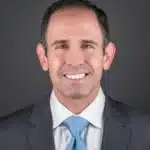
Alex Koury is a CERTIFIED FINANCIAL PLANNER® professional, a CERTIFIED PRIVATE WEALTH ADVISOR (CPWA®), and holds a Certified Exit Planning Advisor (CEPA®). Working out of our Scottsdale office, he has been in the financial services industry for over 15 years. He holds Series 7, 9, 10 & 66 securities registrations– and is a Registered Representative with Mutual Group.
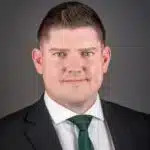
Jason Hosler holds Series 7 and 66 FINRA securities registrations. He brings a technological edge to our firm and helps many of our clients stay current in the fast-moving age of the internet.

Bruce Hosler, Jason Hosler, and Alex Koury were collectively recognized as 2025 Forbes Best-In-State Wealth Management Teams, reflecting their collaborative approach to comprehensive wealth, retirement, and advanced tax planning. This recognition is a fantastic milestone for us, and it inspires us to continue delivering outstanding service to our valued clients every day.
2025 Forbes Best-In-State Wealth Management Teams, created by SHOOK Research. Presented in Jan 2025 based on data as of March 2024. 11,674 Management Teams were considered, approximately 5,300 teams were recognized. Not indicative of advisor’s future performance. Your experience may vary. For more information, please visit.
Transcript
Protecting and Preserving Wealth – The Foundational Financial Plan™
Speakers: Bruce Hosler, Jason Hosler, Alex Koury, & Jon Gay
[Music playing]
Jon Gay (00:08):
Welcome back to Protecting and Preserving Wealth, I’m Jon Gay. I’m joined as always by Bruce Hosler, Jason Hosler, and Alex Koury of Hosler Wealth Management. Gentlemen, always a pleasure to be with you.
Bruce Hosler (00:17):
Jon, it’s great to be with you again.
Jason Hosler (00:18):
Good morning, Jon.
Alex Koury (00:20):
Good to see you, Jon.
Jon Gay (00:21):
Alright, so today we’re talking about the foundational financial plan. And this is a term that gets thrown around a lot, we’ve talked about it in our podcast. It’s used in the industry a lot. And it’s probably good to really go under the hood today because this is so crucially important.
A foundational financial plan covers everything from retirement income, tax strategy, all the way through estate planning, all subtopics I guess we’ve talked about on the podcast before.
Whether you’re years away from retirement or you’re close to it, this conversation’s going to really give you some clarity on where you stand and what you might be missing. Again, I know it’s something we talk about every day, but Bruce, let’s start with you as we dive into the plan.
Bruce Hosler (01:00):
Jon, the first thing I want to talk about is we actually have used the name a “foundational financial plan.” I’m not sure that’s widely used in the industry (financial planning is). We call it our foundational financial plan because we include seven areas that we think people need.
And the first one that’s foundational to everything is your financial planning software package that is dynamic. And when I say dynamic, that means it changes. If there’s a war in Iran and the markets are down, we can go in and look and see dynamically, “Hey, did this affect a client’s retirement probability of success or not?”
Jon Gay (01:43):
Wait, there’s a war in Iran? I’m kidding, I’m kidding.
Bruce Hosler (01:46):
There might be at this time. We’re not telling anybody when we’re recording this, but I still think they’re sending bombs back and forth.
And anyway, it pulls in all their sources of income (social security, pensions, IRAs, investments), and then it uses a Monte Carlo simulation, which is a thousand iterations from the computer, to tell us the statistical probability of this plan being successful.
So, a thousand iterations, and then it puts flexibility in there for taxes, inflation, healthcare costs, long-term costs. So, these new software packages are very robust. The old pencil and ledger, that’s been gone a long time.
And a lot of people switched to their favorite spreadsheet in Excel, and they thought they can manage it. And we have people coming in with Excel spreadsheets. We have somebody in a little while coming in. They have fantastic spreadsheets, but they can’t do it all, Jon. It’s way too complex.
Jon Gay (02:46):
Even the folks — and I saw this on my social media last night — there’s actually a World Microsoft Excel championship, and these guys come in, and girls come in, with WWE-style intros, they enter the arena.
But I don’t care how good you are at Excel; you have to do the actual software related to this. And for those who don’t know Monte Carlo, we’re not talking about throwing dice down a table here. We’re talking about software that’s going to simulate a whole bunch of different scenarios with the markets to really make sure you’re covered.
Bruce Hosler (03:16):
Yeah, and that’s very important because people think of Monte Carlo like you are at a casino, but it’s really about that. It’s the statistical probability of you being successful. And we have the computer doing all the math in the background.
Jason and Alex, I don’t know, do you have anything else you want to talk about this foundational piece, which is the retirement income plan?
Jason Hosler (03:35):
If you’re trying to get to a destination, you need directions or a map. And how good those directions or map are, is going to affect how your journey goes.
So, when you lay everything out and you have it dynamic and you can make adjustments as life changes, “Hey, we want to buy a second house to be able to visit closer to the grandkids. How’s that going to affect our plan?”
And you’re able to answer those “what if” questions, you’re able to find out if you’re on track to reach your goals. And a lot of times, people will just have the goal, “Well, I want to stay at the same lifestyle that I’ve been at.”
Well, what is that? Let’s define that. Let’s put it down, let’s do the math behind it and actually have something that we can achieve.
Bruce Hosler (04:22):
Alex, I want you to just explain how powerful it is when we have clients come in and they retire and they’re like, “Hey, we think we might want to travel more. We might want to spend some more money.”
And you can pull up the financial planning software in the conference room right in front of them and do the “what if” analysis of like, “Hey, what if we spent $20,000 a year for the next 10 years?” What is that like, that experience, Alex?
Alex Koury (04:47):
It actually gives people peace of mind and confidence knowing that they could do the things that they internally want to do, like travel, but they don’t externally maybe say it out loud or believe that they can actually do that. Because they’re dealing with big numbers. They don’t really break it down into smaller little goals like traveling is.
But when we implement that into the plan to show them, “Hey, if you travel for (we’re making this up) 10 years, you’re spending 20,000 more dollars a year while you’re still healthy and able to travel, you can still accomplish your goals for the long term.” And everyone’s primary goal is not running out of money.
Jon Gay (05:22):
I’ve got to imagine that’s just such a sense of relief for your clients, where, like Bruce alluded to, these numbers can make their heads spin, but you put the numbers out and say, “Hey, if you want to do this, here are the numbers that say yes, you can.”
Bruce Hosler (05:35):
Yeah, you’re still going to be okay. And there’ll still be plenty of money for the kids, don’t worry. You don’t have to live on rice and beans, and wear that 40-year-old shawl anymore.
So, the second step in this foundational financial plan is tax planning and Roth conversion, and moving to tax-free. And in that whole concept, we’re blowing apart the concept that tax-deferred IRA 401(k) traditional is the best way to save. It’s not, it’s a trap.
And if you believe that the tax rates are going to be higher in the future, you’ve just trapped a bunch of money that’s going to be subject to potentially higher tax rates in the future. So, the Tax Cuts and Jobs Act was passed in 2017, it was extended permanently now.
And so, we have this opportunity right now to strategically plan what the tax bracket is and use a tax bracket strategy to help people move systematically to tax-free. And we prepare one of those plans for our clients every year.
Jon Gay (06:36):
So, the third leg in this seven-step process is estate legacy and beneficiary planning. What can we talk about with that?
Bruce Hosler (06:43):
Jason, we’ve just added wealth.com, so we can do really advanced review of people’s financial estate planning documents, their legal documents. Talk about that a little bit and how, first of all, avoiding probate, that’s what everybody wants to do and avoiding unnecessary taxes.
Jason Hosler (07:01):
Yeah. When you go to probate and you have to pay the fees associated with it, it’s all on public record. That is not the way to go. And especially in Arizona, where we live, it’s very easy to avoid that with simple beneficiary planning, with proper titling of your assets, utilizing legal instruments like a living trust.
And you want to make sure that you have all of these important documents in order. A durable financial power of attorney, for example. What if you’re incapacitated? You’re not dead- you just get in a car accident or you get Alzheimer’s. Who’s making decisions for you? Who can reach into your IRA or Roth IRA and get a distribution legally, making your medical decisions and end-of-life decisions in advance?
All of that is bound up into the estate planning conversation. And since we’ve begun utilizing wealth.com, we’ve become much more powerful in that area. Of course, we’re not lawyers, and we don’t provide legal advice, but wealth.com employs a number of lawyers who prepare legal documents for all 50 states across America.
And they’re able to assist us with helping our clients get those documents done without necessarily needing to go to an estate planning attorney. Who, in a lot of cases, is utilizing the same technique where they have a standard set of documents that they’re using, and then they plug in the specific sections needed for a client’s situation.
Jon Gay (08:33):
Copy paste.
Jason Hosler (08:34):
Yeah. Additionally, this is another area where we are seeing AI start to really impact our work. Specifically, around being able to review existing estate plans. We can upload anyone’s trust and estate plan to their Esther AI, and it will review it for inconsistencies, spelling mistakes, be able to lay out what will happen at the first and second death of a couple.
It will go through and see everything that is going on in there, summarize it for you and let you know, “Hey, maybe you should update this trust because you’re missing some new provisions that have been entered into the law.” Or “Hey, we might have an issue with how these assets are being divided.” All of that. So-
Bruce Hosler (09:21):
Drafting errors.
Jason Hosler (09:23):
The efficiencies that we’re gaining from AI enhancing all of our work are becoming quite incredible. And we want to avoid common mistakes.
Bruce Hosler (09:32):
We run into one where people have failed to fund the trust that is titled “Assets” in the trust. The most common one we run into (and Alex and I are running into these many times down here in Scottsdale), people come into us, they will have a living trust, but Alex, how do they have that brokerage account titled with the husband and wife? How is it titled frequently, Alex?
Alex Koury (09:54):
Well, we typically find it as, first off, like a joint tenant with rights of survivorship. And that’s okay from a perspective of just from an ownership perspective. But taxability, that’s not how you want to have your brokerage or taxable accounts funded. You want to have it funded through the trust.
And again, what it has to do with is when you have appreciated assets of stocks in your account, you want to make sure that at the death of the first spouse, that the surviving spouse receives what’s called a step-up in cost basis of the full value of the account.
So, that way, if the surviving spouse needs any money from that taxable portfolio, they can sell any asset tax-free without paying any capital gains tax. And then on the death of the second surviving spouse, the trust also receives a second step up in basis.
So, that way, when these monies are transferred to beneficiaries like your children, they receive a step-up in basis again to the market value of the fair market value. They could sell the assets tax-free and pay no capital gains. So, it’s also a tax strategy that’s very important as part of your overall planning to avoid your estate from being overtaxed.
Bruce Hosler (11:03):
And that’s available, folks, because we are in a community property state; there’s nine of those in the country. And you heard what Alex said: the spouse can sell those assets tax-free. You know we are all about tax-free here at Hosler Wealth Management.
Jon Gay (11:17):
You wrote the book on it, Bruce.
Bruce Hosler (11:18):
I did. So, Jason, let’s just talk about these social security strategies and claiming strategies and the software we use, and the option it gives to clients, and the information that they’re acquiring with that software calculation that we run for them.
Jason Hosler (11:32):
The calculator runs something like over 3,000 different claiming scenarios when you put it in there. So, there really is a lot of options, and people don’t really think about it.
But it does focus down into a few options. Are we claiming earlier? Are we claiming later? Are we claiming off of a spouse’s record? Are we claiming off of our own? And then the timing of the claiming is not just the quantitative, how much money are we going to get and when are we going to get it?
But also, qualitative; what’s your life expectancy? Are you dealing with health problems? There’s a lot of information that comes into that, and it could be that maybe we draw down accounts earlier in retirement to let social security grow later.
Or maybe we’re claiming it early because we have a terminal illness and we want to get the most out of the system that we can. So, you’ve got to take both that quantitative and qualitative into account when you’re looking at your social security strategies.
Bruce Hosler (12:31):
Thank you, Jason, that’s great. I want to talk for a second about insurance planning. One of the things we’re seeing is that long-term care is becoming bigger and bigger and bigger. And we have clients that have had traditional policies.
I just had a client this last week. She had had the policy for like 35 years and they increased the premium 40% last year, and they were increasing the premium 40% this year. We’re seeing that across the board.
We have asset-based life insurance policies with a long-term care writer where they lock in the premium. They can’t change it; they can’t change the benefits. These types of policies are available. A lot of people don’t know about them.
The other thing I want to talk about on insurance planning that is very important and people don’t know this: is we can use life insurance retirement plans to help move your taxable money to tax-free. And there’s been some big breakaways that have happened and some big discoveries in the marketplace.
And now, we have for the first time, really viable fee-based, cash value variable life insurance, so you can fully participate in the upside of the market. We can have flexible investments, it’s fee-based. It’s very competitive. There’s no risk of paying a big commission up front, and people can get these policies and qualify for them and move their taxable money to the tax-free bucket.
So, we do Roth conversions to move the qualified money. We use the life insurance retirement plan for the taxable money. I can now take very wealthy people and very economically, as a fiduciary, help them move to tax-free. It is amazing the opportunities that we have now.
We want to introduce this. It only has really been out in the marketplace for about a year. It’s kind of all established now with a big, well-established company. Folks, if you have taxable money and you want to move it tax-free, you need to be talking to us because we have some new opportunities for you to do that.
Now, in the middle of all this, Alex, number six is our risk analysis and how we deal with risk with income ladders in the beginning and growth on the back end. How is this all important? And also talk about our investment planning. So, risk analysis and investment plan, Alex. Talk to our listeners about how we combine those together for their benefit.
Alex Koury (14:58):
So, step number one is talking about risk analysis. And if you talk to most advisors, they’re going to ask you questions about, “Are you a conservative investor? Are you aggressive? Are you somewhere in the middle as a moderate investor?” And that’s all good and well.
But today’s changed quite a bit with technology and scoring systems, where we can actually identify your risk by an actual number. Which I think is more compelling to someone to understand: “Hey, if I’m only willing to take, out of a scale of 100 risk of a 70,” you know that your portfolio should match that same score of a 70.
And why is that important? Because you want to be able to match up your personal risk with the type of risk you’re actually taking in your investment account. So, we use a software called Nitrogen to help us identify that number with you and for you. We’ll run you through an analysis first of your own personal risk.
And then we’ll take your existing investment portfolio, and we’ll plug it into the model as well to determine what’s the risk number of your current investment plan. And then we’ll be able to determine, “Hey, are you taking on too much risk based on what you’ve told us? Is it too little risk? Can you up your risk a little bit there as well to get you the ideal risk-reward profile?”
But especially when it comes to retirement planning, we talk about our bucket strategy system. There’s two different buckets that we use. For purposes of today’s conversation, we have an income bucket for 10 years. You want to make sure you’ve got safe, secure income from that piece of your portfolio.
What that does is it allows you to take and shift all the remaining money you have in your total plan to your long-term bucket, which is invested in more of your equities and your stock in the portfolio.
Bruce Hosler (16:34):
And private equity, private opportunities.
Alex Koury (16:37):
Absolutely. But it helps you optimize for the long term all the things we’re all concerned about when it comes to inflation, not keeping up with the rising costs of healthcare in the future.
If you have legacy goals to pass on a certain amount of money to your heirs, all those things play into your planning and why it’s so crucial to have a specific risk number, and then compare that against your investment plan to make sure those two numbers are aligned. If they’re not, you know how to adjust that, and we can help you with that too.
Bruce Hosler (17:04):
Excellent, excellent. So, that’s the foundational financial plan, Jon. It includes all of those, and we start with that for every client. And when we do that planning, it comes with a satisfaction guarantee. We’ll give them the check back for what they paid for it.
We have had great success, and we have great clients that love to have that planning in place. And Alex really hit it on the head. When you have this planning in place, it gives you peace of mind because you know what the future looks like because you’ve planned for it.
Jon Gay (17:34):
Absolutely. And just to recap, the seven points here for the foundational financial plan are the retirement income plan, tax planning and Roth conversion, estate legacy and beneficiary planning, number three. Number four, social security strategies; number five, insurance planning; number six, risk analysis. And number seven, the investment plan.
If our listeners or viewers want to come talk to you and the team at Hosler Wealth Management, how do they best find you?
Bruce Hosler (18:00):
Well, of course, they can find us online at hoslerwm.com, and if they’re in Prescott, Jason, how do they get ahold of you?
Jason Hosler (18:07):
Give us a call at (928)-778-7666.
Bruce Hosler (18:11):
And down in Scottsdale, Alex?
Alex Koury (18:13):
Yes, (480)-994-7342.
Jon Gay (18:18):
Alright gentlemen, we’ll talk to you again in a couple weeks.
Bruce Hosler (18:20):
Thanks, Jon.
Jason Hosler (18:21):
Thank you, Jon.
Alex Koury (18:22):
Bye, Jon. Take care.
[Music playing]
Disclosure: (12:56):
Investment advisory services are offered through Mutual Advisors LLC, DBA Hosler Wealth Management, a SEC registered investment advisor. Securities are offered through Mutual Securities, Inc., a member FINRA/SIPC. Mutual Advisors, LLC and Mutual Securities, Inc. (collectively Mutual Group) are affiliated companies.
Forward-looking commentary should not be misconstrued as investment or financial advice. The advisor associated with this podcast is not monitored for comments, and any comments should be given directly to the office at the contact information specified.
Any tax advice contained in this communication, including any attachments, is not intended or written to be used and cannot be used for the purpose of 1) avoiding federal or state tax penalties; 2) promoting marketing or recommending to another party any transaction or matter addressed herein; and 3) tax preparation and accounting services are offered independently through Hosler Wealth Management Tax Services.
Any tax advice provided by tax professionals under Hosler Wealth Management Tax Services is separate and unrelated to any advisory or security services offered through Mutual Group. The accuracy, completeness, and timeliness of the information contained in this podcast cannot be guaranteed. Mutual Group does not provide tax or legal advice. You should consult a legal or tax professional regarding your individual situation.
Accordingly, Hosler Wealth Management does not warranty, guarantee or make any representations or assume any liability with regard to financial results based on the use of the information in this podcast.
Be The First To Know About New Podcast Episodes!
"*" indicates required fields