





New Tax Laws in 2026: Roth Conversions, Charitable Deduction Limits, Social Security Fairness, and Roth 401(k) Catch-Ups
Share:


Table of Contents
The 2026 tax-law changes discussed in this episode affect how retirees, high earners, and families with large IRAs plan for taxes now versus later. The rules touch Roth conversion timing, charitable deduction mechanics, Social Security benefits for certain pension recipients, and how catch-up 401(k) contributions must be funded—each with real “miss it and you lose it” consequences.
Key Takeaways
- Lower tax rates being treated as “permanent” (until future law changes) can create a longer runway for multi-year Roth conversion planning.
- Beginning in 2026, itemized charitable deductions face a new “floor” of 0.5% of adjusted gross income (AGI) before deductions start.
- The Social Security Fairness Act repeal of the windfall elimination provision is retroactive to January 1, 2024—but benefits may require urgent action for some people. (Social Security)
- For high earners, 401(k) catch-up contributions shift to Roth treatment in 2026, bringing taxes forward while building more tax-free retirement assets. (IRS)
- Donor-advised fund “bunching” can pull future charitable giving into one tax year to help itemizing—and may reduce the impact of the new charitable deduction floor.
What This Episode Covers
Episode 82 focuses on four tax-law items that become relevant now that it’s 2026: (1) the idea that tax rates for income and estate taxes have been made “permanent” (with the practical reminder that nothing in tax law is truly permanent), (2) a new limit on charitable deduction usefulness via a 0.5% AGI floor, (3) the Social Security Fairness Act change that removes the windfall elimination provision for certain workers with government pensions, and (4) SECURE Act 2.0 catch-up contribution rules that change how certain higher earners fund catch-ups—pushing those dollars into Roth treatment.
A core theme is timing: timing Roth conversions while rates are relatively favorable; timing charitable gifts to maximize deductible impact when many taxpayers no longer itemize; timing Social Security claims if the prior windfall elimination provision prevented benefits; and timing 401(k) contributions so the right dollars land in the right “bucket” (taxable now vs. taxable later vs. tax-free later).
The conversation also highlights planning friction points that show up in real households: large tax-deferred IRAs inside potentially taxable estates can create “double taxation” (estate tax plus income tax); charitable giving habits can become less tax-efficient when deductions aren’t itemized; and retirement plan rules can shift the tax bill from the future to the present without people noticing until W-2s and withholding don’t match expectations.
Eligibility
Roth conversion and estate-tax planning focus
- Applies to households using IRA-to-Roth conversion strategies, especially those who expect higher lifetime taxes or have large tax-deferred balances.
- The episode specifically calls out added importance for people who may have a taxable estate and significant tax-deferred IRAs.
Charitable deduction “floor” impact
- Applies to taxpayers who itemize charitable deductions; starting in 2026, deductions only begin above a 0.5% AGI floor.
- The episode notes that for donors over age 70½, a qualified charitable distribution (QCD) may be a better fit than giving from taxable accounts.
Social Security Fairness Act
- Applies to certain people with government pensions (teachers, police, firefighters, and other state/local employees) whose pension work was not covered by Social Security, but who also earned enough Social Security elsewhere to qualify.
SECURE Act 2.0 catch-up change
- Applies beginning in 2026 to higher earners (as described in the episode: earning over $150,000 and over age 50) making catch-up contributions—those catch-up dollars are required to go into the Roth 401(k) bucket.
Execution Mechanics
“Permanent” tax rates and multi-year Roth conversion planning
- The episode frames the new law as extending lower tax rates, making long-term Roth conversion planning more attractive and easier to spread across multiple years.
- Tax planning and Roth conversion planning
Potential “double taxation” inside taxable estates
- The episode warns that large tax-deferred IRAs inside a taxable estate can be exposed to estate tax and then income tax later when heirs distribute the IRA. Converting to Roth can remove the income tax layer on those distributions (while not removing estate tax exposure).
- Inherited IRA / Roth conversion timing before death
Charitable deduction floor (0.5% of AGI)
- Beginning in 2026, the first 0.5% of AGI in charitable donations does not count toward the itemized charitable deduction; only amounts above that floor do.
- QCD primer.
Donor-advised fund “bunching” strategy using appreciated assets
- The episode describes “bunching” multiple years of giving into one year via a donor-advised fund so the donor can itemize in that year, then grant out to charities over time. It also highlights donating appreciated stock to avoid recognizing capital gains and then diversifying inside the donor-advised fund.
- Donor-Advised Funds 2024
- Corroboration (general concept only): donating appreciated stock to a donor-advised fund can reduce capital gains exposure and support an immediate charitable deduction. (Fidelity Charitable)
Social Security Fairness Act and the claim “clock”
- The episode explains the repeal of the windfall elimination provision and emphasizes urgency: some people must claim to start the retroactive window, and the episode states Social Security only allows going back six months for retroactive claims.
- Corroboration (retroactive effective month): SSA explains WEP/GPO no longer apply to benefits payable for January 2024 and later. (Social Security)
Roth catch-up contribution mandate (higher earners)
- The episode states that for higher earners over $150,000 and age 50+, catch-up contributions must go into the Roth 401(k) beginning in 2026; it also states the catch-up amount discussed is $8,000 for 2026, and notes an additional catch-up for ages 60–63.
- Corroboration (rule category): IRS guidance discusses SECURE 2.0 Roth catch-up implementation and increased catch-up limits for ages 60–63. (IRS)
Common Errors / Disqualifiers
- Assuming “permanent” means “forever,” and failing to plan for law changes (the episode explicitly notes tax law permanence can change with elections).
- Missing the charitable deduction floor in 2026 and being surprised when the deductible amount is smaller than the check you wrote.
- Donating annually when you’re not itemizing anyway, rather than considering bunching via a donor-advised fund (when appropriate).
- For Social Security Fairness Act-eligible workers: not filing a claim because you previously expected little or no Social Security—and losing months of retroactive benefits due to the claimed six-month lookback window described in the episode.
- For higher earners: not realizing catch-up dollars will be taxed in the current year when pushed into Roth treatment, potentially creating withholding surprises.
Why This Matters
These changes all touch the same pressure point: the tax “bucket” your dollars land in.
- Roth conversions and Roth 401(k) funding move money toward tax-free growth and tax-free distributions later—at the cost of paying tax sooner.
- Charitable planning is shifting from “write a check and deduct it” toward “structure the gift so it actually changes your tax return,” especially when many households take standard deductions.
- Social Security rule changes can produce meaningful increases for certain public servants—but only if the benefit is claimed in time.
Planning note: A common household mistake is treating each area—retirement accounts, giving, and Social Security—as separate. The episode’s point is that they interact through AGI, tax brackets, and timing.
Administrative or Reporting Notes
- The episode emphasizes that some benefits (like the Social Security change) may happen automatically for people already receiving benefits, but requires action for people who never claimed because prior rules reduced benefits.
- For QCD reporting mechanics, the IRS provides Form 1040 reporting guidance (helpful as a corroboration reference, not an expansion of the episode’s rules). (IRS)
Summary
Episode 82 is a practical checklist for 2026 planning: use the longer runway of lower tax rates to map multi-year Roth conversions; re-check charitable giving strategies under a new 0.5% AGI deduction floor; make sure eligible public servants don’t miss Social Security Fairness Act benefits; and prepare for Roth treatment on catch-up contributions if you’re a higher earner.
Quick Answer
- What are the key new tax changes for 2026 discussed in this episode?
They include “permanent” tax rates (subject to future law changes), a charitable deduction floor, Social Security Fairness Act changes, and Roth treatment for certain 401(k) catch-up contributions.
Planning note: People often hear one headline and miss how the other three affect their own return. - Why do lower tax rates matter for Roth conversions?
The episode explains that the longer runway of lower rates makes multi-year Roth conversion planning more attractive.
Planning note: The most common miss is doing conversions “randomly” instead of spreading them across years. - What is the “double taxation” risk for large IRAs in a taxable estate?
The episode warns tax-deferred IRAs can face estate tax and then income tax when distributed; converting to Roth can remove the income-tax layer on distributions.
Planning note: Many families only model one tax and forget the second layer. - What is the new charitable deduction floor in 2026?
The first 0.5% of AGI in charitable giving does not count toward the charitable itemized deduction; only amounts above the floor are deductible.
Planning note: It’s easy to miss because your giving didn’t change—only the deduction did. - How does the episode’s $500,000 income example work for the floor?
It states that at $500,000 AGI, the first $2,500 (0.5%) would not be deductible, and only the amount above that would count.
Planning note: The confusion usually comes from assuming the entire donation is deductible. - When might a QCD make more sense than giving cash?
The episode says for donors over age 70½, QCDs may be a better way to do charitable giving than donating from taxable money.
Planning note: Many donors think QCDs are “only for RMDs,” and stop there. - What is the donor-advised fund “bunching” strategy?
You bunch multiple years of giving into a single year’s contribution (often using appreciated stock), take the deduction in that year, and grant to charities over time.
Planning note: People often think they must give to charities in the same year to get the deduction—the episode explains a different cadence. - Why does donating appreciated stock matter in the episode’s donor-advised fund example?
The episode explains donating appreciated stock can avoid recognizing capital gains, while still producing an itemized charitable deduction for that year.
Planning note: The common oversight is selling first (and triggering gains) before donating. - What did the Social Security Fairness Act change?
The episode says it repealed the windfall elimination provision for certain workers with pensions that weren’t covered by Social Security, and it is retroactive to January 1, 2024.
Planning note: Many people assume old Social Security reductions are “permanent,” so they never re-check. - Who is most likely affected by the windfall elimination provision repeal?
The episode lists groups like teachers, police officers, firefighters, and other state/local government employees with pensions not covered by Social Security, who also earned enough Social Security elsewhere to qualify.
Planning note: People often forget earlier/later non-government work still counts toward eligibility. - Why is the episode urgent about Social Security claiming?
It states you can only go back and claim six months of retroactive Social Security, so delaying a claim can mean losing benefits.
Planning note: The usual confusion is assuming retroactive law changes automatically pay everyone back fully. - What is changing for 401(k) catch-up contributions in 2026 for high earners?
The episode says if you earn over $150,000 and are over age 50, catch-up contributions must be deposited into the Roth 401(k) instead of pre-tax.
Planning note: Many people don’t find out until payroll and withholding look “off.” - Why does the government prefer Roth treatment for catch-ups (as explained in the episode)?
The episode says the motivation is collecting taxable income sooner—those dollars get taxed in the current year rather than deferred.
Planning note: People often assume it’s “just generosity,” and miss the tax-timing shift. - Is there a special catch-up rule for ages 60–63 mentioned in the episode?
Yes. The episode notes an additional catch-up amount for people ages 60–63 (described as up to $3,250 more than the $8,000 catch-up).
Planning note: Many savers don’t realize this window exists and miss the short age band.
- What are the key new tax changes for 2026 discussed in this episode?
Guided Follow-Up FAQ
Roth Conversions and Estate Planning Pressure Points
If I’m considering Roth conversions, what is the episode’s main planning idea?
Use the extended runway of lower rates to spread Roth conversions across multiple years rather than forcing everything into one year.
Planning note: The most frequent mistake is letting the calendar decide instead of using bracket-aware pacing.
Once conversions are on the table, inheritance mechanics matter.
Why does the episode focus on heirs and the 10-year window?
It explains a Roth IRA can be more valuable to heirs because distributions can come out tax-free, and the episode references the 10-year stretch under SECURE Act rules.
Planning note: Families often plan for their own retirement taxes but skip the beneficiary tax timeline.
That leads directly into the “double taxation” warning.
What does the episode mean by “double taxation” on a tax-deferred IRA in a taxable estate?
It describes the possibility of estate tax plus later income tax on distributions, and frames Roth conversion as a way to remove income tax on the IRA distributions.
Planning note: People tend to treat estate tax and income tax as separate silos—this is where they stack.
Charitable Giving Under the 2026 Deduction Floor
How does the 0.5% AGI floor change the way you think about charitable deductions?
The episode’s point is that small-to-moderate giving may produce less deduction than expected because the first 0.5% of AGI doesn’t count.
Planning note: It’s common to confuse “a donation receipt” with “a deduction that changes taxable income.”
If the deduction is harder to access, structure matters more.
Why does the episode bring up donor-advised funds here?
Because bunching gifts into one year can help exceed standard deductions and concentrate the “floor” impact into a single year instead of repeating it annually.
Planning note: People often assume a donor-advised fund changes their generosity; it mainly changes timing and tax mechanics.
For older donors, there’s also a different lane.
When does the episode suggest considering a QCD?
It says if you’re over 70½ and giving to charity, a QCD may make more sense than giving from taxable accounts.
Planning note: Many retirees only learn about QCDs after they’ve already made the donation the “old” way.
Social Security Fairness Act—Don’t Miss the Window
If I was affected by the windfall elimination provision, does the episode say this change is automatic?
It notes that for people already claiming Social Security, changes may occur automatically (including retroactive lump sums), but people who never claimed may need to file and should do so urgently.
Planning note: A frequent assumption is “SSA will find me,” which can be costly if a claim is required.
The urgency is about timing, not paperwork preferences.
What’s the key timing risk the episode highlights?
It states Social Security only allows going back six months for retroactive claims—so delay can mean lost benefits even when the law is retroactive.
Planning note: People often hear “retroactive” and stop listening—this is where the details bite.
Additional Educational References
- Social Security Administration: Social Security Fairness Act (WEP/GPO no longer apply to benefits payable for January 2024 and later) (Social Security)
- IRS newsroom: final regulations and guidance on SECURE 2.0 Roth catch-up rule and age 60–63 catch-up provisions (IRS)
- IRS: IRA FAQs on reporting qualified charitable distributions (QCD) (IRS)
The episode’s 2026 message is simple: tax timing is shifting, so Roth strategy, charitable structure, Social Security claiming, and catch-up contribution mechanics all deserve a fresh review this year.
If any of these topics match your situation—large IRAs, regular charitable giving, a government pension, or catch-up contributions—consider getting a coordinated tax-and-retirement review so the rules work together instead of colliding at filing time.
For more information about anything related to your finances, contact Bruce Hosler and the team at Hosler Wealth Management. Contact Our Team: https://www.hoslerwm.com/contact-us/
Call the Prescott office at (928) 778-7666 or our Scottsdale office at (480) 994-7342.
To view all Protecting and Preserving Wealth Podcast episodes: https://www.hoslerwm.com/protectingwealthpodcast/
Limitation of Liability Disclosures: https://www.hoslerwm.com/disclosures/
Copyright © 2026 Hosler Wealth Management | All Rights Reserved. #ProtectingWealthPodcast #ProtectingandPreservingWealthPodcast #HoslerWealthManagement #BruceHosler
Produced by JAG Podcast Productions – https://www.jagpodcastproductions.com.
Host


Bruce Hosler is the founder and principal of Hosler Wealth Management which has offices in Prescott and Scottsdale, Arizona. As an Enrolled Agent, CERTIFIED FINANCIAL PLANNER® professional, and Certified Private Wealth Advisor (CPWA®), Bruce brings a multifaceted approach to advanced financial and tax planning. He is recognized as a prominent financial professional with over 29 years of experience and a eight-time consecutive *Forbes Best-In-State Wealth Advisor in Arizona. Bruce recently authored the book MOVING TO TAX-FREE™ Strategies For Creating Tax-Free Retirement Income And Tax-Free Lifetime Legacy Income For Your Children. www.movingtotaxfree.com.
In the Protecting & Preserving Wealth podcast, Bruce and his guests discuss current financial topics and provide timely answers for our listeners.
If you have a topic of interest, please let us know by emailing info@hoslerwm.com. We welcome your suggestions.
2018-2025 Forbes Best In State Wealth Advisors, created by SHOOK Research. Presented in April 2025 based on data gathered from June 2023 to June 2024. Not indicative of advisor’s future performance. Your experience may vary. For more information please visit.
Guest Profiles
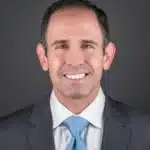
Alex Koury CFP®, CERTIFIED FINANCIAL PLANNER® professional and Wealth Manager in Scottsdale, has worked in the financial services industry for fifteen years as a financial advisor and Financial Planner. He holds Series 7, 9, 10 & 66 securities registrations– and is a Registered Representative with Mutual Group.

Jason Hosler holds Series 7 and 66 FINRA securities registrations. He brings a technological edge to our firm and helps many of our clients stay current in the fast-moving age of the internet.

Bruce Hosler, Jason Hosler, and Alex Koury were collectively recognized as 2025 Forbes Best-In-State Wealth Management Teams, reflecting their collaborative approach to comprehensive wealth, retirement, and advanced tax planning. This recognition is a fantastic milestone for us, and it inspires us to continue delivering outstanding service to our valued clients every day.
2025 Forbes Best-In-State Wealth Management Teams, created by SHOOK Research. Presented in Jan 2025 based on data as of March 2024. 11,674 Management Teams were considered, approximately 5,300 teams were recognized. Not indicative of advisor’s future performance. Your experience may vary. For more information, please visit.
Transcript
Protecting and Preserving Wealth Episode 82 – New Tax Laws For You To Understand in 2026
Speakers: Bruce Hosler, Jason Hosler, & Alex Koury & Jon Gay
[Music playing]
Jon Gay (00:05):
Welcome back to Protecting and Preserving Wealth. I’m Jon Gay, joined as always by Bruce Hosler, Jason Hosler, and Alex Koury of Hosler Wealth Management. Gentlemen, always good to be with you.
Bruce Hosler (00:13):
Jon, it’s good to be with you this morning.
Jason Hosler (00:15):
Hey there, Jon.
Alex Koury (00:17):
Good morning, Jon.
Jon Gay (00:18):
I know one of the things that you specialize at Hosler Wealth Management is taxes. And there are some new tax laws that have gone into effect now that we are into 2026. And Bruce, I know you’ve got several of these you want to focus on today that really could have an impact on our listeners’ bottom line. Where do we start?
Bruce Hosler (00:33):
Well, there’s two of them that we want to talk about today from the One Big, Beautiful Bill Act. And then there’s two other new tax laws that I think are applicable. One that was passed in ‘25, and the other one was from prior (the Secure Act 2.0 in 2022), but it became applicable this year.
So, the first one I want to start out with is the One Big, Beautiful Bill as permanent. Now, there’s nothing permanent in tax law until the next election.
But we have permanent tax rates for both income taxes and for estate taxes, and that is really good and very important. And especially for our clients that are trying to move to tax-free, the net benefits for IRA to Roth conversions are more attractive for highly taxed Americans than just about any other time.
Jason Hosler (01:25):
Yeah, making that permanent, it isn’t just until we have a change in Congress and President, but they have to actually get that passed. They have to get that signed off by the President to put that into law.
So, we do have an extension with these lower tax rates. It makes long-term Roth conversion planning more attractive, and you have, hopefully, a longer period of time (probably at least through the current administration at the very least) to be able to utilize these lower tax rates that were set to expire at the end of this last year. You can spread out, over a number of years, your conversions.
And it’s going to affect people that have potentially taxable estates in the future. That Roth IRA is now much more valuable because when it gets passed down to the heirs and they’re able to take that out tax-free and stretch that out for 10 years under the Secure Act, they’re going to have less overall tax drag on the estate passing to the next generation.
Bruce Hosler (02:25):
And Jason, there’s another twist here that I want to show our listeners or point out to them. Folks, if you have potentially a taxable estate and you have big tax-deferred IRAs in there, those potentially could be subject to double taxation. What are you talking about, Bruce?
Well, they’re subject to estate taxes at 40%, but then it’s going to be subject to income tax at another 30, 40, 50%. You could be paying 70%, 80% on that IRA that you left and you didn’t convert. If you’ve converted that to a Roth IRA, at least it’s not subject to income taxes in addition to the estate taxes.
So, it’s important if you have a taxable estate, you do not leave those IRAs unconverted. You get those converted to a Roth. Even if you have to pay a 30% or 35% tax bracket, it’s better to do that while you’re alive.
Now, the next thing I want to talk about, Alex, is some restraints that we’re going to have in the tax code regarding the deductibility of charitable donations. And in our last podcast, we talked about QCDs.
Well, Alex, this new tax law change affecting the deduction. Now, it starts in 2026. So, beginning in ‘26, if our clients make a deduction, there’s half a percent that they can’t deduct anymore. Talk to our listeners about this new tax law and how limiting it is.
Alex Koury (03:57):
Yeah, so the word is called a “floor.” So, you have to be donating above the floor, again, half of a percent of your adjusted gross income. So, in this example, let’s say if you were making $500,000 a year, and you made a charitable deduction, the first $2,500, or half of a percent, does not get included in the deduction you receive.
It’s only the amount above that that you would get a deduction for on your tax return as an itemized deduction for your scheduled deductions. So, it’s really important to know that you don’t want to miss those little things in there because this is brand new.
So, if you are making charitable donations and you are over 70 and a half, then the QCD, or the qualified charitable distribution, may make more sense for you to do your donations through your IRA as opposed to giving cash or other securities or other assets from your taxable monies.
Bruce Hosler (04:51):
There’s another planning thought that I have, and I want to introduce this to our listeners today. I want to bring it back up. We’ve talked about donor-advised funds before. And the benefit to a donor-advised fund is you can bunch your charitable (giving) into one year.
And so, instead, if you already have $30,000 or $40,000 or $50,000 now with the senior deduction and in standard deductions, your charitable deductions may not be helping you at all.
So, if you do a donor-advised fund, and let’s say you have a bunch of stock, let’s say you have Abbott stock, and you give away $100,000 worth of Abbott stock (you give it to your donor-advised fund), you can have an itemized deduction of $100,000 for that this year.
But in 2026, that first half a percent, you don’t get a deduction on that. Well, instead of giving $20,000 a year for five years, you give the $100,000 away to your donor-advised fund in one year. And you only were limited the first year, the other four years, you were not limited.
Let’s talk about on the donor-advised funds, just the gift of appreciated assets instead of recognizing the capital gain on those. What’s the break there? How does that donor-advised fund work?
Jason Hosler (06:07):
So, this bunching strategy is something that we use with our clients when we are actually trying to get an itemized deduction because as Bruce said, often, with the new senior deduction, the higher standard deduction, the majority of people aren’t itemizing anymore.
And it’s harder than ever to be able to do so. So, if you have a number of medical expenses, if you have a big tax bill from the prior year, and it looks like a good year, where we might want to do a bunching strategy, the donor-advised fund is a great tool for this.
Oftentimes, we’ll have clients that either worked for a company or bought a stock a long time ago that they’ve held for a long time, and it’s appreciated a lot. Some Apple, some Nvidia, something like that. And they have a large, unrecognized capital gain. So, you’re able to kill a couple of birds with this stone of a donor-advised fund.
So, number one, when you make that donation … so let’s just use, for simple math, $100,000. So, let’s say that we donate $100,000 worth of Apple stock into our donor-advised fund, and we bought it 20 years ago, and we’ve held it for a long time, and it’s mostly unrecognized capital gain. We now will not have to recognize that capital gain in the future.
So, one, we’re avoiding that capital gains tax. Number two, because we’ve made that donation, we get $100,000 on our charitable line on the itemized deductions for that year. So, at that amount, you’re going to exceed the standard and senior deduction.
We say we give $20,000 a year on average to our charities, our church, everything all added up together. Now that that Apple stock is in the donor-advised fund, we can go ahead and sell it without recognizing any capital gains and put it into a diversified portfolio, so we don’t have concentration risk.
And every year for the next five years, we can sell off $20,000 of that portfolio, make the gifts that we normally do at the same cadence every year. We’ve just pulled that charitable giving from a tax standpoint from the future to the present to get that deduction. And then we still make those same donations over the next five years from our donor-advised fund.
Bruce Hosler (08:28):
So, our charities receive their gifts, and they don’t know any different, they don’t pay any taxes. It’s beautiful. So, Jon, before we started on the podcast, you asked me if these were all part of the One Big, Beautiful Bill Act.
But this one here, the Social Security Fairness Act, repealed the windfall elimination provisions that the government had on pensions, and they made it retroactive all the way back to January 1st of 2024. So, we’ve had some clients that have already been getting benefits from this.
Now, this affects people that have had government jobs. School teachers, police officers, firefighters, state and local government employees that were covered by a pension, but they were not covered by Social Security at the time they earned that pension.
And then either before or after, they could have worked and earned enough Social Security to qualify. But when they go to claim, they were getting dramatically curtailed on their Social Security benefits because of this windfall elimination provision.
That has now been taken away. And in 2025, the enactment of the Social Security Fairness Act made these benefits available to these workers retroactive all the way back to January 1st of 2024. But here’s the problem, folks: you can only go back and claim for six months against your Social Security.
So, if you don’t claim, even though you could have had it for a year and a half, you can only go six months back. So, it’s very urgent. If you’re one of those people that have been having your Social Security held back, you need to go in and claim on this and get the clock going so you can claim these last six months.
Jon Gay (10:08):
I want to underline that, Bruce. I want to make sure I’m understanding it correctly. That folks who had a pension from a lot of those types of jobs you mentioned were unfairly penalized with Social Security until this had been repealed recently.
Bruce Hosler (10:20):
I don’t know if it’s unfairly, but it’s what the law of the land was. And the Congress felt like it was unfair, so you’re justified there. And so, they’ve eliminated it.
And now, these people fairly they paid into Social Security, they’re going to get their fair share of what they earned in that program. I think it’s a great thing, but I hate to see people missing out on a benefit of the law that could come to them.
Jason Hosler (10:45):
Now, our clients that we have (that were covered under this windfall elimination provision), who had already claimed for Social Security, because they’d already claimed, that retroactive got paid out in a lump sum, and then their ongoing monthly generally increased by the calculated amount.
So, for people who are already claiming, this was happening automatically. But for people who didn’t claim because they wouldn’t have been getting anything due to it, those are the ones. They need to go claim, and it’s very urgent that they do so right away because of that six-month retroactive clock that Bruce was talking about.
Jon Gay (11:18):
Don’t want to leave money on the table.
Bruce Hosler (11:20):
Alex, I want you to talk about our fourth topic here. The Secure Act was enacted back in 2022 about the 401(k) catch-up contribution provisions. Talk about the changes that are becoming effective this year.
Because of COVID-19, they backed it off a few years, but now there’s no more backing this off. This is effective in ‘26. Tell our listeners about what they need to be aware of if they are high earners.
Alex Koury (11:48):
So, if you are a higher earner and you’re earning over $150,000 a year and you’re over the age of 50, you’re going to get your catch-up contribution amount contributed into your Roth 401(k) now. Previously, that money would go into your tax-deferred account.
So, again, pre-tax money, you pay taxes in the future, you don’t pay the taxes now. But now, they’re requiring it beginning 2026 for that money to be deposited into the Roth account, which is great.
The more tax-free money, the better. Don’t defer any longer, especially if you’re a high-income earner. That’s going to be more taxes in the future. We want you to pay lower taxes now anyways, so be aware of that.
Bruce Hosler (12:29):
So, Jason, why is the government forcing this extra catch-up provision to be in a Roth? What is it they’re going to get out of this?
Jason Hosler (12:37):
Well, so here’s exactly the thing. So, for those earning more than $150,000, that catch-up (which has now been increased to $8,000 for 2026) gets taxed in the current year on your W-2. So, the government is forcing those higher earners to recognize that tax now.
The government is saying, “You don’t get to defer that till the future. We’re collecting that tax on you right now.”
Bruce Hosler (13:02):
So, the government is going to collect more taxable income sooner. That’s the motivation. It’s not because they’re good people and they want us to have a Roth. They just want to get their taxable money sooner.
Jason Hosler (13:13):
We like that they’re going to be going to the Roth, though. For most of our clients, we think that that is going to be the best long-term move.
And for your regular 401(k) contribution (not even your catch-up), we’re generally recommending to the vast majority of our clients that they go ahead and recognize the tax on that now. Defer that into the Roth 401(k), start building up your tax-free nest egg while you’re still working.
Bruce Hosler (13:38):
And I want to point out here, the real reason that I love this, guys (and when I say this, that is funding your 401(k) to the Roth side, not the tax-deferred side) is because this allows you to put more money than ever before. I think it’s up to $24,000 this year if you’re under 50.
$24,000 into a Roth 401(k) every year, it’s the biggest shelter to get into a Roth. Much greater than the $8,000 that you can put into a Roth IRA. So, you can grow your Roth account much greater working through your 401(k) Roth.
Alex Koury (14:16):
One other note I wanted to make on that as well for catch-up contributions also because of the Secure Act 2.0, is that if you’re between the ages of 60 and 63, you do get an additional catch-up as well. Up to $3,250 more than the $8,000.
So, just be aware of that. Don’t leave any money on the table. That money can be also contributed into your 401(k) and retirement accounts.
Bruce Hosler (14:40):
It’s just those people in that donut hole though, right, Alex? Just in those years.
Alex Koury (14:44):
60 to 63.
Jon Gay (14:46):
Bruce, don’t say the word “donut hole” because you’re going to make me think of health insurance. That’s a whole other topic.
[Laughter]
Jon Gay (14:51):
We won’t go there, but I will mention that if anybody listening or watching wants help with their financial planning, you really got to get expert help and talk to professionals about this. How do they reach you at Hosler Wealth Management?
Bruce Hosler (15:02):
They can reach us on the website at hoslerwm.com. In Prescott, Jason?
Jason Hosler (15:07):
Give us a call at (928) 778-7666.
Bruce Hosler (15:10):
And in Scottsdale, Alex?
Alex Koury (15:12):
(480) 994-7342.
Jon Gay (15:16):
Alright, good morning, gentlemen. I’m going to go grab a donut. We’ll talk soon.
Bruce Hosler (15:18):
Thanks, Jon.
Jason Hosler (15:19):
Sounds good, Jon.
[Music playing]
Disclosure: (23:50):
Investment advisory services are offered through Mutual Advisors LLC, DBA Hosler Wealth Management, a SEC registered investment advisor. Securities are offered through Mutual Securities, Inc., a member FINRA/SIPC. Mutual Advisors, LLC and Mutual Securities, Inc. (collectively Mutual Group) are affiliated companies.
Forward-looking commentary should not be misconstrued as investment or financial advice. The advisor associated with this podcast is not monitored for comments, and any comments should be given directly to the office at the contact information specified.
Any tax advice contained in this communication, including any attachments, is not intended or written to be used and cannot be used for the purpose of 1) avoiding federal or state tax penalties; 2) promoting marketing or recommending to another party any transaction or matter addressed herein; and 3) tax preparation and accounting services are offered independently through Hosler Wealth Management Tax Services.
Any tax advice provided by tax professionals under Hosler Wealth Management Tax Services is separate and unrelated to any advisory or security services offered through Mutual Group. The accuracy, completeness, and timeliness of the information contained in this podcast cannot be guaranteed. Mutual Group does not provide tax or legal advice. You should consult a legal or tax professional regarding your individual situation.
Accordingly, Hosler Wealth Management does not warranty, guarantee or make any representations or assume any liability with regard to financial results based on the use of the information in this podcast.
Be The First To Know About New Podcast Episodes!
"*" indicates required fields