





Understanding the Interest Rate Trap and How Wealthy Retirees Can Navigate It

Share:


Table of Contents
For more than a decade, retirees, investors, and even financial professionals lived in a world where near-zero interest rates felt almost permanent. But the economic landscape has shifted dramatically. In today’s environment—defined by a national debt exceeding $38 trillion, persistent deficits, and a political system reluctant to slow spending—the era of ultra-low interest rates is over. And according to the Hosler Wealth Management team, retirees must adapt if they want to protect their wealth, income, and legacy.
This podcast episode explores what has changed, why higher interest rates are likely here to stay, and the practical steps wealthy families can take to build stability, increase tax efficiency, and strengthen multi-generational plans in this new financial reality.
Why Interest Rates Are Structurally Higher Now
For years, many assumed rates would eventually settle back down near zero. But as the team discusses, this assumption no longer aligns with economic realities.
A National Debt That Keeps Growing
The U.S. national debt recently crossed $38 trillion—an almost incomprehensible number. Government spending continues at a pace that makes meaningful reduction difficult. Even short periods of surplus rarely last long.
Because of this:
- The government must continually borrow more.
- Bond markets demand higher yields to offset risk.
- Zero-percent borrowing is no longer acceptable to buyers of U.S. debt.
For a deeper look at how the national debt shapes long-term financial conditions, you can explore our episode “The U.S. Debt Clock and What It Can Tell You.”
Global Spending and Sticky Inflation
The U.S. isn’t the only country spending aggressively. Governments worldwide are investing in infrastructure and other major initiatives. This pushes overall demand higher and makes inflation more difficult to control.
Even if the Federal Reserve aims for a 2% target, structural forces make it difficult to push inflation down sustainably. This reality supports higher long-term interest rates.
What It Means for Retirees
Higher rates aren’t temporary—they’re a new baseline. And retirees must plan accordingly.
How Higher Rates Affect Stock Market Valuations
The conversation highlights a shift in conventional wisdom regarding how interest rates interact with stock performance.
Pressure on Small-Cap Companies
Historically, small-cap stocks outperform during late expansionary periods. But that didn’t happen during the rapid post-COVID rate hikes.
Protecting and Preserving Wealt…
Why?
- Higher rates raise the cost of capital.
- Smaller companies, which depend more on borrowing, face tighter margins.
- Business growth becomes more expensive, slowing expansion.
What This Means for Retiree Portfolios
Valuations may remain compressed for certain segments of the market. Retirees need:
- Smarter diversification
- A focus on quality and resilience
- Careful rebalancing strategies
This is not a time for outdated assumptions.
How Higher Rates Change Retirement Income Planning
One of the most important themes in the episode is how retirees should rethink income planning in a world where interest rates—and inflation—remain elevated.
The Bucket Strategy Matters More Than Ever
Hosler Wealth Management uses a bucketed income approach, allocating money into structured time periods:
- Bucket 1: First 5 years of retirement income
- Bucket 2: Years 6–10
- Long-term investments: Designed to outpace inflation
Right now, fixed-income portfolios generate over 5%, strengthening the first decade of retirement income. But if interest rates fall again, future bond ladders may yield less—making long-term planning critical.
“Morningstar on bucket portfolios”
Inflation and Mortgage Decisions
Many retirees still hold mortgages or consider reverse mortgages. With the possibility of lower rates in the future, refinancing opportunities may emerge. But inflation remains a wildcard—income strategies must account for rising costs.
Estate Planning Opportunities in a Higher-Rate Environment
Higher rates don’t just affect retirement—they reshape estate planning and generational wealth strategies as well.
The Case for Acting Now on Taxes
With the continuation of historically low tax rates and several years left under the current administration, retirees have a window to convert pre-tax assets to tax-free ones.
This includes:
- 401(k)s
- 403(b)s
- 457s
- Other tax-deferred accounts
Strategic, phased Roth conversions can reduce lifetime tax burdens, improve retirement income certainty, and leave heirs with more tax-efficient assets.
Charitable and Family Gifting
Higher rates and looming fiscal pressures mean estate policies may face future changes. Families are increasingly asking: Why wait to give?
Options discussed include:
- Charitable giving with immediate tax deductions
- Annual exclusion gifts to children
- Early transfer of wealth to support younger generations when they need it most
Current Gifting Limits (2025)
The annual gift exclusion is $19,000 per person, meaning a married couple can gift $38,000 to each child with no tax filing required.
Meanwhile, the One Big Beautiful Bill (OBBA) temporarily raised the estate exemption to $15 million per person, or $30 million for married couples—a rare opportunity for high-net-worth families.
“Kiplinger: estate tax exemption analysis”
Determining How Much You Can Afford to Gift
One of the episode’s most practical insights: before gifting anything, retirees need a foundational financial plan.
Your Wealth Must Be Segmented Into Two Buckets
- Money needed for your lifestyle
- Healthcare
- Living expenses
- Aging-related costs
- Protection for a surviving spouse
- Money earmarked for legacy
- Funds that can confidently be given away
- Assets available for annual gifting or charitable strategies
- Dollars that won’t jeopardize retirement stability
Without this clarity, families risk giving away assets they may later need.
Tax-Free Legacy Tools for Multi-Generational Wealth
Retirees increasingly want to leave tax-free assets to children—and to avoid unintended consequences like higher Medicare premiums or taxed Social Security benefits for heirs.
The episode highlights two major tools:
1. Roth IRAs
- Grown through strategic annual conversions
- Withdrawals are tax-free
- Heirs have 10 years to liquidate under SECURE Act rules
- Provides flexibility to help with grandchildren’s education, weddings, or major milestones
2. Life Insurance Retirement Plans
These policies allow access to tax-free loans against the cash value. They’re powerful when part of a larger multi-bucket tax strategy.
Beneficiary Planning—An Overlooked Estate Strategy
One of the episode’s simplest but most meaningful reminders: you don’t need an attorney every time you want to adjust who receives your accounts.
Protecting and Preserving Wealt…
Why Beneficiary Forms Matter
Most financial accounts allow:
- Primary beneficiaries
- Contingent beneficiaries
- Tertiary beneficiaries
And in some cases, strategic disclaimers allow assets to pass directly to the next generation—especially powerful with Roth IRAs.
This flexibility gives families more control than they realize.
Action Steps for Retired Wealthy Families (3–5 Key Moves)
Based on the episode discussion, here are the most important actions retirees can evaluate right now:
1. Explore Gifting While Exemptions Are High
With a $30M exemption for married couples, high-net-worth families have a unique window.
2. Build or Update a Comprehensive Financial Plan
This establishes how much wealth you need versus how much is available to gift.
3. Increase Tax-Free Wealth With Roth Strategy and Life Insurance
Consistent conversions and structured insurance plans strengthen long-term legacy.
4. Implement a Bucketed Retirement Income Ladder
Create stability in years 1–10; invest smartly for long-term inflation.
5. Review and Optimize Beneficiary Designations
This can immediately improve legacy efficiency without legal fees.
Final Thoughts
The interest rate landscape has changed—and it’s reshaping retirement and estate strategy for wealthy families. But with intentional planning, retirees can turn today’s higher-rate environment into a foundation for stronger income, smarter taxes, and more meaningful family legacies.
If you’d like help building a personalized plan, the Hosler Wealth Management team in Prescott and Scottsdale is available to guide you through this complex but opportunity-filled landscape.
*Additional Reading References:
1. Morningstar also highlights bucket portfolios as one of the most effective ways to protect retirees from sequence-of-returns risk during volatile markets. (Source: Morningstar – Bucket Portfolios for Retirement Income)
2. Kiplinger notes that federal estate tax exemptions remain at historically elevated levels and continue to offer unique planning opportunities for high-net-worth families—although these thresholds may not remain permanently. (Source: Kiplinger – Estate Tax Exemption Updates 2025)
For more information about anything related to your finances, contact Bruce Hosler and the team at Hosler Wealth Management. Contact Our Team: https://www.hoslerwm.com/contact-us/
Call the Prescott office at (928) 778-7666 or our Scottsdale office at (480) 994-7342.
To view all Protecting and Preserving Wealth Podcast episodes: https://www.hoslerwm.com/protectingwealthpodcast/
Limitation of Liability Disclosures: https://www.hoslerwm.com/disclosures/
Copyright © 2026 Hosler Wealth Management | All Rights Reserved. #ProtectingWealthPodcast #ProtectingandPreservingWealthPodcast #HoslerWealthManagement #BruceHosler
Produced by JAG Podcast Productions – https://www.jagpodcastproductions.com.
Host


2018-2025 Forbes Best In State Wealth Advisors, created by SHOOK Research. Presented in April 2025 based on data gathered from June 2023 to June 2024. Not indicative of advisor’s future performance. Your experience may vary. For more information please visit.
Guest Profiles
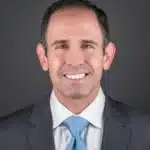
Alex Koury is a CERTIFIED FINANCIAL PLANNER® professional, a CERTIFIED PRIVATE WEALTH ADVISOR (CPWA®), and holds a Certified Exit Planning Advisor (CEPA®). Working out of our Scottsdale office, he has been in the financial services industry for over 15 years. He holds Series 7, 9, 10 & 66 securities registrations– and is a Registered Representative with Mutual Group.

Jason Hosler holds Series 7 and 66 FINRA securities registrations. He brings a technological edge to our firm and helps many of our clients stay current in the fast-moving age of the internet.

Bruce Hosler, Jason Hosler, and Alex Koury were collectively recognized as 2025 Forbes Best-In-State Wealth Management Teams, reflecting their collaborative approach to comprehensive wealth, retirement, and advanced tax planning. This recognition is a fantastic milestone for us, and it inspires us to continue delivering outstanding service to our valued clients every day.
2025 Forbes Best-In-State Wealth Management Teams, created by SHOOK Research. Presented in Jan 2025 based on data as of March 2024. 11,674 Management Teams were considered, approximately 5,300 teams were recognized. Not indicative of advisor’s future performance. Your experience may vary. For more information, please visit.
Transcript
Protecting and Preserving Wealth Episode 77 – The Interest Rate Trap
Speakers: Bruce Hosler, Jason Hosler, Alex Koury, & Jon Gay
Jon Gay (00:04):
Welcome back to Protecting and Preserving Wealth. I am Jon Jag Gay, I’m joined by Alex Koury, Jason Hosler, and Bruce Hosler of Hosler Wealth Management. Great to be with all of you today.
Alex Koury (00:14):
Good to see you, Jon.
Bruce Hosler (00:17):
Great day today, Jon, thanks for being with us.
Jason Hosler (00:19):
Good morning, Jon. How are you today, buddy?
Jon Gay (00:20):
I’m great, I’m great. Morning for both of us now that we’re only two hours apart with you all in Arizona and me in Michigan here. Alright, today we’re talking about something that continues to define markets: wealth planning and retirement strategy.
More than anything else, the interest rate trap and how retired wealthy families can avoid getting caught in it. So, for the last 15 years, investors, retirees, and even advisors have been conditioned to believe that interest rates should always fall back near zero again, but the reality today is very different.
With the national debt exploding, persistent fiscal deficits, and a political system with zero appetite to reduce spending it seems, we are entering a structurally higher interest rate era, and higher rates are actually both good and bad for retirees.
Higher rates are good for income planning, bond ladders, yield generation, and fixed income actually serves a real purpose again, something we haven’t had for over a decade. Retirees can now design higher, more reliable income ladders.
But higher rates are also bad because they create valuation pressure on stocks. They increase borrowing costs, they create more volatility, they change what business valuations look like, and they force retirees to rethink how to draw, invest, gift, transfer, and plan for legacy across generations.
So, as we turn to our team here at Hosler Wealth Management, we’re going to unpack how this affects portfolio construction, gifting strategies, tax planning, retirement distribution strategy, and legacy transfer in this new era.
So, guys, why do we believe interest rates are going to stay structurally higher and what role does the national debt play in this?
Bruce Hosler (01:52):
As much as we love that everything that’s going on right now with the economy and taxes with the One, Big, Beautiful Bill passed, the national debt just crept up over $37 trillion to $38 trillion. It seems like the government has no appetite to cut back on their spending.
So, as we seen last night, November 13th last night, Trump signed the bill so that the government could be opened up after the longest government shutdown in history. The whole situation of the government cutting back comes into question, including President Trump’s thinking of giving a dividend check of $2,000 to all the taxpayers of the United States when really maybe, possibly, he could split the baby and pay down the debt with half of that.
But even he is giving the money back to the people. He wants to stay in favor of the voters so that in the midterms here, when the Republicans are trying to carry out his plans, and the Republicans are staying in favor so they can remain in control. This is a very interesting dynamic that we have right now.
Alex, how do we see this playing out going forward over the next 5, 10 years?
Alex Koury (03:14):
The problem is that if you think about it, it’s a really hard number to conceptualize, $37 trillion of debt.
Bruce Hosler (03:19):
Now 38.
Alex Koury (03:21):
Now 38 trillion, right, exactly.
Jason Hosler (03:23):
What’s another trillion at this point? (Laughter)
Alex Koury (03:27):
How do you even begin to even think about paying that off now? There may be some years in there where revenues can exceed our expenses and that again, doesn’t add to our deficits every year, doesn’t add to the debt. We can pay our debts down a little bit, but over a longer period of time historically, in any presidency, under any administration, regardless of your party, it doesn’t last very long anyways.
So, we still have the same problem every year. We’re adding more, adding more, adding more to that national debt. Now the bond market says, well, you can do that, but now, you’re going to have to pay up for those rates. We’re not going to take a 0% rate any longer like we did for 10 years in the 2010s.
There is now a cost that comes towards that borrowing, and as much as everyone hopes and wants to get back down to towards what the Federal Reserve believes is the 2% target rate, it’s very hard to see that it’s actually going to happen at all really because of many other factors.
And you got governments domestically, globally, spending money on goods and investing in infrastructure, that keeps everything naturally higher anyway. So, to say that we’re going to be able to bring our borrowing costs down is very hard to see how that’s going to happen.
Jon Gay (04:39):
So, how do higher interest rates permanently change how retirees should think about stock market valuations?
Jason Hosler (04:45):
One of the things that we’ve seen since we had the quickest pace of interest rate increases post-COVID and the Federal Reserve raised interest rates, is that we did not see the standard expansion, especially in the small cap market for those smaller companies that are worth less than a billion dollars. Generally, late and expansionary period, small cap tends to outperform the large cap.
We have not seen that happen this time. Those valuations are under pressure because those smaller companies that have a higher cost of capital, it makes it harder for them to do business, it makes it harder for them to be profitable, it makes their profit margins thinner. It has a whole host of effects. So, some of the conventional wisdom that we’ve been used to is already breaking with these higher interest rates, and that’s just one example.
Jon Gay (05:36):
Okay, so now I won’t say billion, but I’ll say million-dollar question. How does this impact retirement, income planning, and distribution strategy?
Bruce Hosler (05:45):
So, certainly, the first thing that we start with is we use the buckets of money approach, and we start with your first five years of income and the second years of income, and so we create this 10-year ladder of income. And right now, our fixed income portfolio is paying north of 5%.
Now, as the Fed lowers interest rates and President Trump has determined that he’s going to try and get those interest rates down for homeowners and retirees that still have a mortgage in retirement, maybe they’re doing a reverse mortgage or maybe they’re still paying on their old mortgage. Those interest rates are higher; there’s a chance to refinance and bring those down.
But as those interest rates tend to come down, that affects our ability to create an income ladder that keeps up with inflation. I mean inflation, as Alex already talked about earlier, has been a little sticky right now.
And so, we think there’s fears out there that clients need to have interest that keeps up with current inflation, and then the flip side of that is they have to have investments in the equity markets that keep up with long-term inflation over the long term.
Jon Gay (06:51):
So, this next question is going to be right in the wheelhouse of Hosler Wealth Management. What opportunities does this new rate environment create for advanced estate planning and legacy transfer?
Alex Koury (07:02):
So, the primary thing that we believe in, and we still continue to believe in, is that we want to pay taxes now while we have historically low rates. And now, that President Trump is in office for another three more years after this, we still have a window of time where we know tax rates aren’t going to go up any more than they are today. We are still in the lowest tax rate environment that we’ve been in ever.
So, we still continue to believe in taking your 401(k)s, your 457s, your 403(b) plans that are tax-deferred and strategically over time, convert a portion of those monies to Roth IRAs.
Bruce Hosler (07:37):
Tax-free.
Alex Koury (07:40):
We want to move to tax-free, that’s exactly correct. We want to move to tax-free, that’s one idea there. Another idea revolves around charitable planning and also thinking about how do you give to your children now and not waiting so much longer to give money when you pass away.
We have many more families today that are asking the questions about what can I do now to give more, give me a tax deduction now, we’ll give some money away to charity potentially if we’re charitably inclined, and or what does the process look like for giving money now to our kids and start transferring the money now before it may be too late. Because again, estate plans and estates in general will probably be under attack as well because why? That’s money the government can use to tax and pay down their debts.
Jon Gay (08:24):
So, Alex, you’ve talked a lot about some broad ideas, but let’s get down to the proverbial brass tacks before we wrap up today. Can you guys give me maybe three to five actionable steps that retired wealthy families can take right now in this current environment? Again, we’re recording this on November 13th, 2025.
Bruce Hosler (08:41):
Certainly, the first thing that we’re seeing right now is the estate tax with the OBBA, the One, Big, Beautiful Bill steps up to 15 million per person. So, a married couple can actually leave $30 million now to their children estate tax-free.
But we’re seeing clients that have wealth trying to begin gifting this year right now, giving their children money while their children are young, in college, or just out of college, have young children and families of their own, they could use that money. That annual gifting exclusion amount is $19,000.
A husband can give $19,000 to a child, a wife can give $19,000 to a child. So, they could gift as much as $38,000 to one of their children with no gift tax implications, no gift tax filing. That’s the first idea I think that we want to share with wealthy families, is if you have enough that you can afford to start gifting now, then you can do that.
Now, Alex, I’m going to let you answer the question: how do clients know if they can afford to gift? What do they have to put in place so they have confidence that they can start gifting now?
Alex Koury (09:53):
So, before you start taking any actions, what we want to do or what you want to do is have a foundational financial plan in place that we’re measuring different things. We got to look at, number one, your retirement planning.
Of your total estate, how much money do you need in order to make sure that your lifestyle doesn’t change, that you’re able to do all things you want to do, take care of yourself and your partner or spouse in older age, so that’s going to be that bucket of money. That’s your number one priority.
Number two would be, here’s all your other monies that we are going to target and we’re going to allocate towards your legacy plans. That’s the money you can give away comfortably every year, however you want to do it. But we help you identify that plan and put it into place with action steps so that way, you know how much again you can give away versus how much you actually need for yourself.
Bruce Hosler (10:42):
Jason, a third priority that we’re trying to do for clients is leaving a legacy, a tax-free legacy. Talk just in general terms at a high level of some of those tools of how families can leave their children tax-free money so it doesn’t screw up their Medicare, it doesn’t screw up their social security when their kids finally inherit the money because the parents have left tax-free money.
Jason Hosler (11:03):
Well, of course, as we’re moving to tax-free with our clients, every year we’re preparing a tax plan and helping them convert traditional IRAs to Roth IRAs. When a child inherits a Roth IRA, that’s tax-free for 10 years under the Secure Act rules, and after those 10 years, they have to take it out.
We’re also utilizing life insurance retirement plans to be able to position other monies into a tax-free bucket where you can take loans against the cash value of the policy, and that is not a taxable event. You can take a loan against that policy; you can pay that money back in. So, we’re seeing great success with our clients who are establishing that planning, and there’s some really neat features there that I think people should consider.
Bruce Hosler (11:52):
Jon, just in closing on this topic, the last thing that we want to help clients remember, we had a lady in the other day, and we reminded her that she didn’t have to go to the attorney every time she wanted to change her beneficiaries. That a lot of these accounts that we have, we use beneficiary planning. So, we use a primary, a contingent and tertiary beneficiaries.
So, if dad dies and he leaves the money to his wife and she goes, “I don’t need this money, I’m okay,” She can disclaim as a beneficiary, and now, it goes to the children or the grandchildren. So, we can do really cool planning with beneficiary planning.
That’s the other legacy tip that I would leave to families. And if that’s a Roth IRA, imagine being able to give tax-free money to kids that are in high earning years, but they could use it to put grandchildren through college, pay for weddings, different things like that.
There’s some really cool planning that we have going on now, and the clients are very much interested in doing this with these higher interest rates going on and what they’re looking for, this planning is very beneficial.
Jon Gay (12:55):
It’s certainly not your grandparents or even your parents’ retirement planning world, and I appreciate that the three of you are staying on top of current events, where things are in terms of politics and financial, and what we need to do to stay on top of things as we roll into 2026 here.
Gentlemen, if folks want to reach you and your team at Hosler Wealth Management, what are the best ways to find you?
Bruce Hosler (13:15):
Jason, how do they get us in Prescott?
Jason Hosler (13:17):
In Prescott, you can give us a call (928)-778-7666.
Bruce Hosler (13:21):
In Scottsdale, Alex?
Alex Koury (13:23):
(480)-994-7342.
Bruce Hosler (13:26):
Of course, folks, you can reach us at our website, hoslerwm.com.
Jon Gay (13:31):
Alright, great stuff gentlemen. We’ll talk again in a couple weeks.
Jason Hosler (13:33):
Thanks, Jon.
Bruce Hosler (13:34):
Thanks, Jon.
[Music Playing]
Alex Koury (13:35):
Thank you very much, Jon.
Disclosure: (23:50):
Investment advisory services are offered through Mutual Advisors LLC, DBA Hosler Wealth Management, a SEC registered investment advisor. Securities are offered through Mutual Securities, Inc., a member FINRA/SIPC. Mutual Advisors, LLC and Mutual Securities, Inc. (collectively Mutual Group) are affiliated companies.
Forward-looking commentary should not be misconstrued as investment or financial advice. The advisor associated with this podcast is not monitored for comments, and any comments should be given directly to the office at the contact information specified.
Any tax advice contained in this communication, including any attachments, is not intended or written to be used and cannot be used for the purpose of 1) avoiding federal or state tax penalties; 2) promoting marketing or recommending to another party any transaction or matter addressed herein; and 3) tax preparation and accounting services are offered independently through Hosler Wealth Management Tax Services.
Any tax advice provided by tax professionals under Hosler Wealth Management Tax Services is separate and unrelated to any advisory or security services offered through Mutual Group. The accuracy, completeness, and timeliness of the information contained in this podcast cannot be guaranteed. Mutual Group does not provide tax or legal advice. You should consult a legal or tax professional regarding your individual situation.
Accordingly, Hosler Wealth Management does not warranty, guarantee or make any representations or assume any liability with regard to financial results based on the use of the information in this podcast.
Be The First To Know About New Podcast Episodes!
"*" indicates required fields